
1–Hello and welcome to close reading classic literature with me.
2–Doctor Octavia COX.
3–It is a truth universally acknowledged that Jane Austen was a lover of irony.
4–And to day, I’m going to consider the irony of the famous opening lines of Jane austen’s novel, pride and Prejudice.
5–So what are the ironies? What are the jokes?
6–What can we learn from the novels opening couple of sentences.
7–So let’s get straight to the text.
8–Here is the opening of Jane austen’s Pride and Prejudice, the famous lines.
9–It is a truth universally acknowledged, that a single man in possession of a good fortune must be in want of a wife.
10–However, little known the feelings or views of such a man may be on his 1st entering a neighbourhood.
11–This truth is so well fixed in the minds of the surrounding families
12–that he is considered as the rightful property of someone or other of their daughters.
13–The 1st thing we might think about this opening statement, given its tone, is, it is really rather a silly thing to proclaim. (宣告、宣称)
14–After all, not all single men want wives.
15–Surely, this sense of absurdity is encouraged by the over-the-top diction [‘dɪkʃn], A truth is a truth. 【这种荒谬感是由夸张的措辞(A truth is a truth)所强化的。】
16–To state that the truth is universally acknowledged is to overegg the pudding (过度修饰或做过头).
17–We might also note though,
18–that the word acknowledged establishes the importance of accepting or acknowledging the truth,
19–which, of course, is one of the, one of the cruxes [krʌks:关键;难题] of the novel that will follow.
20–Both Lizzy and Darcy have to acknowledge truths about themselves, in particular,
21–however uncomfortable they may be to accept at 1st.
22–So right from the beginning, we’ve got the play between truth and knowledge.
23–There are truths, and then there’s acknowledging truth
24–there’s knowing truth, or there’s having an acceptance.
25–We might also ask ourselves a question– from Whose perspective is the opening sentence taken?
26–Are we being led into the minds, the perspective of characters we are about to meet?
27–So through free indirect discourse, which is a technique that I’ve spoken about elsewhere on my channel.
28–But if you’re interested after this one, do go and, um, watch some of those videos about what free indirect discourse is.
29–But very quickly, it’s when a narrative voice in the 3rd person moves into the language, the perspective, the idiom, the um, the thoughts, etc.
第三人称的叙述声音融入了一个或多个角色,(或某个群体角色,或某个特定角色)的语言、视角、习语、思想等等之中。
31–of one or more characters, or, you know, a group of characters, perhaps, or an individual character.
32–So here, perhaps this opening statement, is the narrative voice moving into
33–the minds, or the position, or the general group think of certain character or set of characters.
34–So is this the view of Meryton?
35–Is this the view of people within Meryton, like Mrs. Bennet?
36–Or is this, in fact, the the very view, the particular view of Mrs. Bennet as an individual,
37–or even perhaps someone like Charlotte Lucas?
38–So are we encouraged, then, to treat this opening sentence,
39–such the hyperbole of this opening sentence rightly.
40–and I would say that overstatement is always something to be wary of [‘weəri] in Austen, although…(小心、谨慎;留心、提防)
41–That is itself, of course, a slight overstatement. 当然,这本身也略微有点夸张。
42–But Austein, generally speaking, does operate far more in understatements 但总的来说,奥斯汀更倾向于运用低调陈述,
43–and a kind of ironic understatement, or even litotes [laɪ’təʊtiːz], um, than she does in overstatement. 一种带有反讽意味的低调陈述,或者曲言法,而非夸张。
45–An overstatement is usually marked in Austen. 夸张在奥斯汀作品中通常是带有标记的。
46–So it’s interesting to pay attention here to the fact
47–we have very overblown overstatements in this this opening famous line, 在这个著名的开篇句中,我们看到了非常夸张的夸大其词
48–a truth universally acknowledged, is is definitely an overstatement.
49–So why does Austen do that here, when so often she operates in understatement?
50–Even though the tone is apparen’tly lighthearted.
51–What this opening does show, sincerely, I think,
52–is the claustrophobic [ˌklɔːstrə’fəʊbɪk], marriage-centric environment 那种令人窒息的(罹患或引起幽闭恐怖的)、以婚姻为中心的环境氛围。
53–within small market towns such as Meriton in the period that Austin was writing.
54–And there are a couple of points that I want to flesh out (长得丰满起来; 使有血有肉)
55–about Austen’s pointed(直截了当的、有针对性的) social commentary through her ironic tone.
56–Just these opening couple of lines.
57–The 1st is about the use of the word property, he considered as the rightful property some one or other of their daughters.
58–Austen plays with expected gender differences in her use of the term rightful property. 玩弄了/戏谑(xuè)、预期的性别差异。
59–It is a rather grim irony, even if expressed lightly here by Austen, or apparently lightly at least,. 这是一种相当严酷的反讽
60–The word property was a very important word in relation to women & marriage in the early 19th century,
61–and the expression that such man is considered as the rightful property of the neighbourhood’s daughters.
62–Austen, ironically plays on the law, on the Convention of Coverture,
63–which was in operation at the time that Austin was living and writing.
64–Indeed, a regency period wife was essentially the property of her husband.
65–She was not a separate, independent person, legally speaking.
66–Samuel Johnson, in his Dictionary of the English Language, 1st, published in 1755,
67–Defines coverture as in law, the estate and condition of a married woman who, by the laws of our realm,
68–is in potestate viri, which translates as “by the power of men”.
69–The rules of coveture meant that a wife was not legally an individual person.
70–She was subsumed officially into that of her husband, and furthermore, a woman’s property.
71–So her money, her chattels, her goods, even her clothes, became her husband’s at the moment of marriage.
72–Legally speaking, a woman was in a much, much better position as a single female.
73–So in the kind of legalese, a fem soul, then as a wife, a fem covert, which is where we we get coverture from. 从法律上讲,女性作为单身女性(fem soul)的地位要比作为妻子(fem covert – 有夫之妇,coverture一词即源于此)好得多。
74–So Barbara Bodichon,
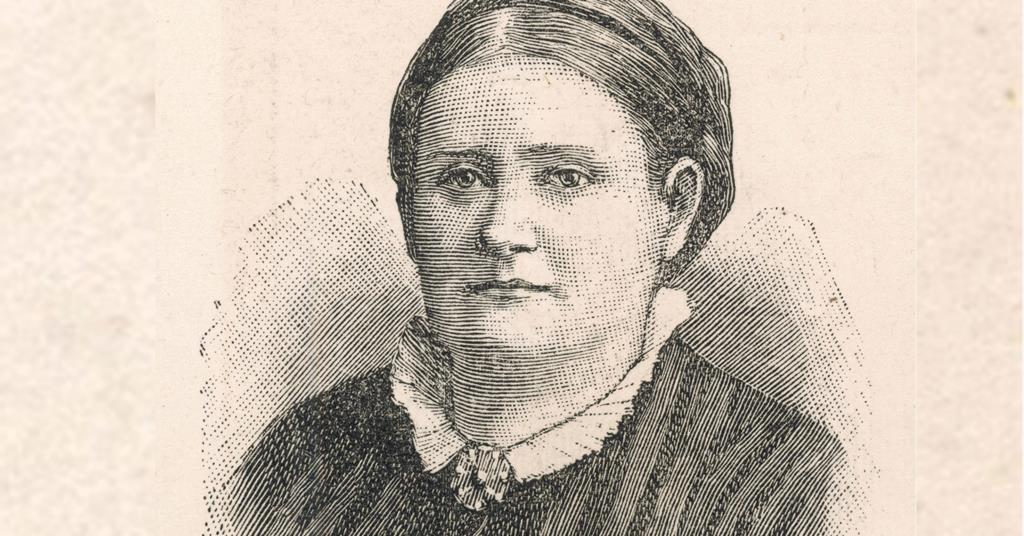
75–Later helpfully outlines the position in her brief summary in a plain language of the most important laws concerning women. 《关于妇女的最重要法律简明通俗摘要》
76–And this was published in 1854, so a while after after Austen’s was living, (1854年出版,奥斯汀去世后一段时间,但仍有助于我们理解19世纪关于妇女的法律)中,
77–but still relevant for helping us understand the the laws concerning women in the 19th century. 清晰地概述了这种地位。
78–So on the left are her sort of notes.
79–And then on the right is a fuller explication [ˌeksplɪ’keɪʃn]. Married women, no legal existence.
80–A man and wife are one person in law.
81–The wife loses all her rights as a single woman, and her existence is entirely absorbed in that of her husband.
82–He is civilly responsible for her acts.
83–She lives under his protection or cover, and her condition is called coverture.
84–A husband has a right to the person of his wife. 男人在民事上对妻子的行为负责。
85–A woman’s body belongs to her husband.
86–She is in his custody, and he can enforc his right by a writ of habeus corpus (人身保护令), so a suspension of the body. (悬置、延留)
87–So he… a husband, has a right to the body of his wife.
88–And so if his wife earns any money with her hands, or, you know, with her intellect,
89–or whatever, earns any money during their marriage, he has a legal right to that, to that money,
90–because she has earned it from her body.
91–Also, of course, that means that a husband has certain conjugal rights also, and, that’s enforced by the law.
92–Those are conjugal rights. Remember, her husband has a right to the person of his wife.
93–Her personal property becomes his. So what was her personal property before marriage,
94–such as money in hand, money at the bank, jewels, household goods, clothes, etc.
95–becomes absolutely her husbands, and he may asign or dispose of them at his pleasure, whether he and his wife live together or not.
96–So even if you are separated from your husband, he still has a right to…to his wife’s personal property,
97–and there are many cases of that.
98–So if you’re interested, then you might want to look up the relationship between Charlotte Smith and her husband.
99–Charlotte Smith was a very prominent protests and novelist in… in the romantic period,
100–in the period that Jane Austen was living and writing.
101–And it will make your hair stand on end, um, the legal…the legal position that… that she was in,
102–particularly that she left her husband, who had treated her very poorly.
103–She… in order to survive, she wrote her poems, particularly elegits.
104–So on and so forth, it published in 1784.
105–And they went through many, many, many editions.
106–They were very popular, or influential on key romantic figures.
107–And her husband would turn up at… even though they were separated, her husband would turn up at the
109–publisher and demand the money that Charlotte Smith had made from her writing.
110–And he was legally entitled to do that.
111–Um, but that was a side track.
112–So… the point that I’m trying to make is that how the husband wielded his almost total authority 丈夫如何行使他几乎完全的权力和法律对其的保护
113–and protection would obviously vary immensely, but it is one of the reasons why, the relationships in 其方式显然会有天壤之别
114–Austen’s novels between the heroes and their female particularly dependence, but any dependence. 男主角与其女性被抚养人(dependence)——尤其是女性被抚养人,但任何被抚养人(任何男主角有责任照顾的人)——
115–So any um person who a hero has duties towards, that those relationships are worth noting. 之间的关系值得关注的原因之一
116–So, e.g. Mr. Darcy, in his relationship with his female dependent sister, Georgiana,
117–he treats her well, even though he is in, you know, a position of high, sort of high power over her, and that’s good.
118–Whereas somebody like John Dashwood, who… who doesn’t… in sense & sensibility,
119–who doesn’t treat his sisters very well at all, his sort of dependant sisters, eleanor and Marianne.
120–That exposes his unheroicalness [ʌnhe’rəʊɪkəlnəs]. 这就暴露了他不具备英雄品质
121–And so these are good signs for a heroine [‘herəʊɪn] looking out for a potential husband.
122–It’s…how does he treat his female dependence?
123–Darcy treats his sister very well and sympathetically and kindly.
124–Um. You know, given her behavior with Wickham,
125–in a different family perhaps she would be treated very differently.
126–But Darcy is sympathetic towards, towards her sister and really looks after her.
127–And also, Lizzy. When she goes to Pemberley, she hears from Mrs. Reynolds, who’s a housekeeper,
128–about how good he is, um taken care of those people who are sort of financially dependent on him, on Mr. Darcy.
129–And that that’s a, that’s a good sign that he will treat his wife well,
130–and that he won’t abuse his position power when they get married,
131–and he is um, you know, she has no legal identity.
132–Um. And equally, men who don’t treat there female dependence,
133–or people who are um dependent on them very well,
134–that is a sign that they are not a good choice as a hero, Which I’ll say.
135–But getting back to Austen’s quotation then,
136–Austen ironically flipped expected gender roles in her use of the phrase rightful property. 奥斯汀在使用“rightful property”这个短语时,反讽地颠倒了预期的性别角色。
137–Upon marriage, A woman became the rightful property of her husband, in terms of the law, in terms of legal rights.
138–And Austin puns on the double meaning of the word “right”, a legal right, an entitlement, and the moral right. 奥斯汀通过双关语(Punning)戏谑了“right”一词的双重含义:法律权利
139–You know, rights as opposed to wrong. 和道德上的正当
140–And she brings them together through Punning.
141–And so asks readers to think about the moral rights and wrongs of the legal rights of property laws regarding marriage and women. 并促使读者思考关于婚姻和妇女的财产法所规定的法律权利,在道德上的正当与否。
142–Within the opening couple of sentences of pride and prejudice,
143–we are presented with analysis of societies anxiety over marriage, particularly for women.
144–And Austin satirizes the behavior of families seeking marriage in the acknowledgment that
145–however little known the feelings or views of such a man may be, 虽然对他的性情见识一无所知
146–he is still eligible for some one or other of a neighborhood’s daughters and so hardly… hardly ringing endorsement. 这很难说是一种有力的认可
147–It is not a good idea given the laws of coverture that I have just been describing to marry a man of little known feelings and views.
148–The way that Jane Austen uses the idea of truth in this opening suggests the delusion,
149–even self-delusion, that is created and encouraged by the anxiety about the need, the apparent need for marriage.
150–A note, the use of the modal verb “Must”, A single man must want a wife
151–who is making the judgment that “it must be so”.
152–The tone is different from a statement of fact.
153–So, e.g., a single man in possession of a good fortune is in want of a wife.
154–It’s different in tone, “must be” is a belief.
155–So whose belief is this? And of course, this concept of belief is comically at odds with the certainty of universal truth. 这种信念的设想与“普遍真理”的确定性形成了喜剧性的冲突。
156–So grammatically, you can say that the sentence almost undermines itself. 从语法上讲,可以说这句话几乎在自我消解
157–The content is also undermined in the way that we move from the hyperbolic truth universally acknowledged 其内容也被我们如何从夸张的“举世公认的真理”
158–to the notion of a particular truth being only well fixed in the minds of the surrounding families. 转移到某个特定真理只是“在周围家庭的头脑中根深蒂固”的概念所消解。
159–So we move from
160–universal to local. And the words “fixed in the minds” does not necessarily suggest a truth, so much as a… belief. 在头脑中根深蒂固”这个说法,与其说暗示了真理,不如说暗示了信念。
162–If something is fixed in the minds, it’s something that you… that you believe, 如果某事在头脑中根深蒂固,那是你相信的东西,
163–perhaps it suggests a…a kind of self-delusion, but it also suggests 也许它暗示了一种自欺(self-delusion),但也暗示了
164–how fixed the idea of marriages into the minds of, of a community such as… such as that of Meriton. 婚姻观念如何深深植根于像梅里顿这样的社区思想中。
165–The movement from the universal to the particular is mirrored in the form of the whole chapter.
166–We move from a narrative voice, however trustworthy,we may or may not consider that voice to be,
167–but we move from his narrative voice, talking of truths universally acknowledged, into the rest of the chapter,
168–which consists almost exclusively of a dialogue between one couple,
169–Mr. and Mrs. Bennet, discussing this very point, and ironically, not agreeing.
170–Mr. Bennet, E.G. teases Mrs. Bennet with the question of the wealthy and single Mr. Bingley marrying one of their daughters.
171–He says, is that his design in settling here?
172–You know, must be in want of a wife?
173–Well, is that his design in settling here?
174–Although also, we might note that for all his teasing of his wife,
175–Mr. Bennett does actually ask Mrs. Bennet of Mr. Bingley,
176–is he married or single?
177–So he also, like everyone else in the neighbourhood,
178–is interested in the eligibility of the newly arrived young man of large fortune,
179–as Mrs. Bennet calls him.
180–So we move from a truth university acknowledged in the 1st sentence
181–to truth so well fixed in the minds of the surrounding families in the 2nd. 在周围家庭的头脑中根深蒂固的真理
182–And what does this shift set up for the rest of the novel in terms of ideas about facts and beliefs and hopes, etc. 这种转变在关于事实、信念、希望等概念方面,为小说的其余部分奠定了怎样的基础?
183–Or perhaps the shift suggests that…suggest ways that group thinking can easily slip from some of us think X, 或许这种转变暗示了群体思维(group thinking)如何轻易地从“我们中有些人认为X”
184–or even only I think X, to all of us must surely think X. 甚至“只有我认为X”,滑向“我们所有人都必定认为X”。
185–And I’ve spoken about that before, the idea of group think in the introduction of Mr. Darcy,
186–slightly later in the novel, the way that, um, the individual can sort of universalize their thinking and… 在小说稍后部分,个体如何将自己的思维普遍化(universalize)
187–then project it into a certain kind of of group, a group thinking, 并将其投射到某种群体思维中,
188–and how that’s presented to us, um very sort of deftly and interestingly, in the novel Pride and Prejudice. 以及《傲慢与偏见》如何巧妙而有趣地向我们呈现了这一点。
189–So this idea of going from well, I think X, or we think X too.
190–Well, every right thinking person, surely will think X.
191–And here, arguably, the thinking of a neighbourhood is extending to become, surely a view shared universally. 在这里,可以说,一个邻里的想法扩展成了“肯定是一个普遍持有的观点”。
192–It might perhaps set us up to encounter Lizzy bennet’s way of thinking. 这或许也为我们理解Lizzy Bennet的思维方式做了铺垫。
193–Who has to learn, of course, the difference between truth and opinion, or belief
194–and that’s one of the kind of central hearts of of the novel that Lizzy has to do, this this um self-discovery, this learning,
195–and avoid the tendency to kind of universalize in the way that Meryton, in this environment that she has grown up in, 她要避免像她成长环境梅里顿所鼓励教导的那种思维方式那样,陷入普遍化(universalize)的倾向。
196–has kind of encouraged, encouraged her to…to learn how to think.
197–So there are several ways in which the ironical tone of the opening sentences of pride and prejudice
198–undermined the ideas presented within them. 通过几种方式消解了其内部呈现的观念。
199–However, while women such as Mrs. Bennet might project such an idea on to a single man that he must want a wife.
200–It should not be forgotten that single men in possession of good fortunes
201–were indeed looking to make eligible matches too.
202–A wife, after all, was required in order to pass on that good fortune, legitimately, to an heir.
203–So a single man who wanted an heir would be in want of a wife,
204–a wife of some kind, to pass down that fortune.
205–So Mr. Collins, E.G., who is a single man of good prospects financially, if not personally,
206–even states in his proposal to Lizzy Bennett, because he is such a romantic,
207–he states in his proposal that he came into Hertfordshire with the design of selecting a wife.
208–And Lizzy Bennett, after Jane Bennett, was the one that he happened to select.
209–It was quite sort of de…de-personalized language
210–that he came into Hertfordshire with the design of selecting a wife,
211–because that was what was needed, um, in order to to, you know, pass on, pass on that property.
212–There is, also, however, a greater level of irony working here.
213–There is an arena in which such a truth is universally acknowledged.
214–Something more metafictional [‘metəfɪkʃn] , that is Regency novels. 某种更具元小说(metafictional)意味的东西
“Metafictional” refers to a literary or narrative technique in which a work self-consciously addresses the devices of fiction, often blurring the boundaries between fiction and reality. (即作品自觉地揭示自身为虚构作品的本质,并可能打破现实与虚构之间的界限。)
215–So I think there is an ironic nod [nɒd] to novelistic convention 我认为这里有一个反讽式的、对小说惯例的暗示。
216–within the sphere of almost all late 18th an early 19th century novels, especially those written by women.
217–The rich hero does indeed marry the worldly heroine, as ultimately happens, of course,
218–within the novel, pride and prejudice itself, indeed, irony of ironies,
219–ultimately, all the eligible single men who constitute a significant character who come into the neighbourhood,
220–Darcy, Bingley, Collins, do end up married by the novels end, and furthermore,
221–married to one of the neighborhoods daughters, Lizzy, Jane, Charlotte.
222–Ultimately, ironically, pride and prejudice has perpetuated the myth, 最终,具有讽刺意味的是,《傲慢与偏见》本身也延续了这个神话,
223–or the truth universally acknowledged, 或者说,这条“举世公认的真理”:
224–that “a single man in possession of a good fortune does want a wife”.
225–In this opening, then, Jane Austen is laughing at herself by ironizing her own novels story. 在这个开篇中,简·奥斯汀通过反讽自己小说的故事,在自我解嘲。
226–Thank you very much indeed for watching.
227–Remember, if you like what I do here in my channel, where I analyze classic literature, then do subscribe.
228–And if you have liked the video, then please do press the thumbs up button.
229–It helps me out in youtube’s algorithm.
230–And what do you think? Do you have any other thoughts about these opening couple of lines?
231–What strikes you about what’s going on and how Austen is playing with the role of women and marriage,
232–and truths universally acknowledged?
233–Do leave your thoughts in the comments below.