傲慢与偏见:夏洛特不容忽视的婚姻现实

在《傲慢与偏见》中,读者往往关注的是伊丽莎白·班纳特的浪漫理想,以及她与达西先生之间炽烈的化学反应。可是,那些没有条件去选择爱情的女性呢?在奥斯汀的小说中,有一个极具魅力却常被低估的人物——夏洛特·卢卡斯。她在一个由婚姻决定女性未来的世界里,做出了务实的选择。在本视频里,我将探讨她的性格、她与伊丽莎白的友情、她的婚姻观,以及她与柯林斯先生的关系。
夏洛特的背景与处境
众所周知,夏洛特·卢卡斯是卢卡斯爵士与夫人的长女。她的家庭虽体面,但并不富有,住在班纳特家附近。她已27岁,这在摄政时代的英国几乎等同于“危险的剩女”。她没有美貌,也没有财富,更缺乏前景,身处一种尴尬的社会中间地带:门第不至于低嫁,但也太平凡贫穷,难以吸引富有的追求者。
她的父亲卢卡斯爵士因被封为骑士而获得了一定的社会地位,但家中财富与头衔并不匹配,因此夏洛特的嫁妆几乎拿不出手。在那个将女性价值与婚姻能力挂钩的社会中,夏洛特是处于劣势的——而她自己对此心知肚明。
她的性格特征:务实
夏洛特最显著的性格特征就是“务实”。她直截了当地对伊丽莎白说过:“你知道我并不浪漫,从来也不是。我只求一个安稳的家。” 与憧憬爱情的伊丽莎白不同,夏洛特清醒地接受现实:像她这样的女子,婚姻的意义不在于激情,而在于保障。
虽然二人是密友,但她们的世界观大相径庭。伊丽莎白是理想主义者,认为婚姻必须建立在爱情与尊重之上;夏洛特则是现实主义者,她深知自己唯一的出路就是一桩务实的婚姻。
惊人的决定:接受柯林斯先生
当夏洛特宣布与柯林斯订婚时,伊丽莎白震惊又失望。她觉得这是“屈辱的场面”,难以理解好友为何要心甘情愿嫁给这样一个愚笨可笑的男人。但务实的夏洛特看得更清楚:柯林斯虽然荒唐,却能给她最重要的东西——安全感。他有稳定的牧师职位,体面而可靠;这对夏洛特来说,远比浪漫更有价值。
家庭压力与经济现实
夏洛特的决定并非孤立,而是深受家庭地位和经济状况影响。卢卡斯家虽然体面,但本质上经济拮据。作为27岁的长女,她若不尽快嫁人,就会成为父母一生的负担。她的存在甚至会影响到妹妹们的婚姻前景,因为家庭资源本就有限。因此,她的婚姻不只是为了自己,更是为了减轻家庭压力。相比之下,伊丽莎白年轻、貌美,还有一定的婚姻资本,可以等待爱情;夏洛特却没有这种“奢侈”。
逃避依赖的未来
在摄政时代,未婚女性的选择极少:要么依赖父母、成为累赘;要么寄居在已婚兄弟姐妹家,失去独立;要么成为家庭教师——这是体面女性最不愿意做的低薪职业。夏洛特显然看透了这些可能性,于是理性选择了柯林斯。婚后她至少拥有属于自己的家、经济稳定,以及一份社会上可接受的位置。与其一生依赖,不如以这种方式保障未来。
夏洛特的婚姻观
在夏洛特眼里,爱情并不是婚姻的必要条件。她觉得爱情太不可靠,无法作为人生保障。她要的只是“一个安稳的家”。婚后,她甚至采取策略,尽量减少与柯林斯的相处时间,鼓励他去花园或频繁拜访凯瑟琳夫人。这样一来,她保留了尽可能多的私人空间,显示出她远不是被动忍受,而是在聪明地“利用手中的牌”。婚姻的解读:妥协还是胜利?
夏洛特与柯林斯的婚姻常被视作“悲剧妥协”,但换个角度看,这也是一种“务实的胜利”。柯林斯虽愚蠢,却可塑性强,容易受制于权威。夏洛特早就看出,他需要的不是浪漫的妻子,而是一个能维持体面家庭的伴侣。她正好胜任。
伊丽莎白来探访时就发现,夏洛特将日常生活安排得井井有条,以减少与柯林斯的接触。这说明她并非被动承受,而是主动塑造出一个可以忍受、甚至颇为舒适的婚姻环境。
夏洛特与玛丽:谁更合适?
有人提出:玛丽(班纳特家三女)会不会更适合柯林斯?表面上看,玛丽博学又严肃,似乎是个搭配。但她缺乏夏洛特的圆滑与社交智慧。玛丽自负而僵硬,根本无法应付柯林斯那种无休止的絮叨和对上位者的谄媚。夏洛特却在父亲卢卡斯爵士(同样爱摆架子)的长期耳濡目染下,学会了如何点头附和、心不在焉地应付长篇大论。这反而让她比玛丽更能“驾驭”柯林斯。
夏洛特幸福吗?
夏洛特的幸福难以用浪漫标准衡量。她的确没有爱情,但她获得了安稳的家与财务保障。对她而言,这是现实环境下最聪明的选择。她与伊丽莎白形成鲜明对照:一个理想主义、敢于冒险;一个现实主义、善于筹划。奥斯汀正是通过这对好友,展示了女性在19世纪社会压力下的两条不同道路。
夏洛特的婚姻最终实现了预期目标。小说后期,柯林斯在信中暗示夏洛特即将有孩子。这不仅稳固了她的未来,也意味着卢卡斯—柯林斯一支的社会地位得以延续。倘若生的是男孩,未来还能继承班纳特家的庄园。换句话说,夏洛特不但保障了自己,也确保了后代的延续。
结论:复杂的生存者
夏洛特·卢卡斯是《傲慢与偏见》中最复杂却常被忽视的人物之一。她没有等待爱情的特权,只能在现实的局限中做出最优选择。她提醒我们:在奥斯汀的时代,不是所有女性都有为爱而嫁的自由,有时务实必须压倒浪漫。那么,你如何看待夏洛特的抉择?她是社会压迫下的悲剧,还是聪明的幸存者?
Introduction: The Overlooked Reality of Chalotte’s Marriage
In Pride and Prejudice, much attention is given to the romantic ideals of Elizabeth Bennet and the fiery chemistry between her and Mr. Darcy. But what about the women who didn’t have the luxury of choosing love? One such fascinating character in Jane Austen’s novel is Charlotte Lucas, a woman who makes a pragmatic choice in a world where women’s futures were dictated by marriage. In this video, I’m going to explore her character, her friendship with Elizabeth, her views on marriage, and her relationship with Mr. Collins.
Charlotte’s Background and Situation
As we know, Charlotte Lucas is the eldest daughter of Sir William and Lady Lucas, a respectable but not wealthy family living near the Bennets. She’s a 27-year-old woman, which in Regency England was considered dangerously close to spinsterhood. Without beauty, wealth, or many prospects, she’s actually caught in a difficult social limbo. She’s too well-born to marry beneath her, yet too plain and poor to attract a wealthy suitor.
Her father, William Lucas, was knighted, which gave the family a certain social standing; however, their wealth did not match their title, meaning that Charlotte had little to offer in terms of dowry. In a society where women’s values were often tied to their marriageability, Charlotte is at a disadvantage, and she knows it.
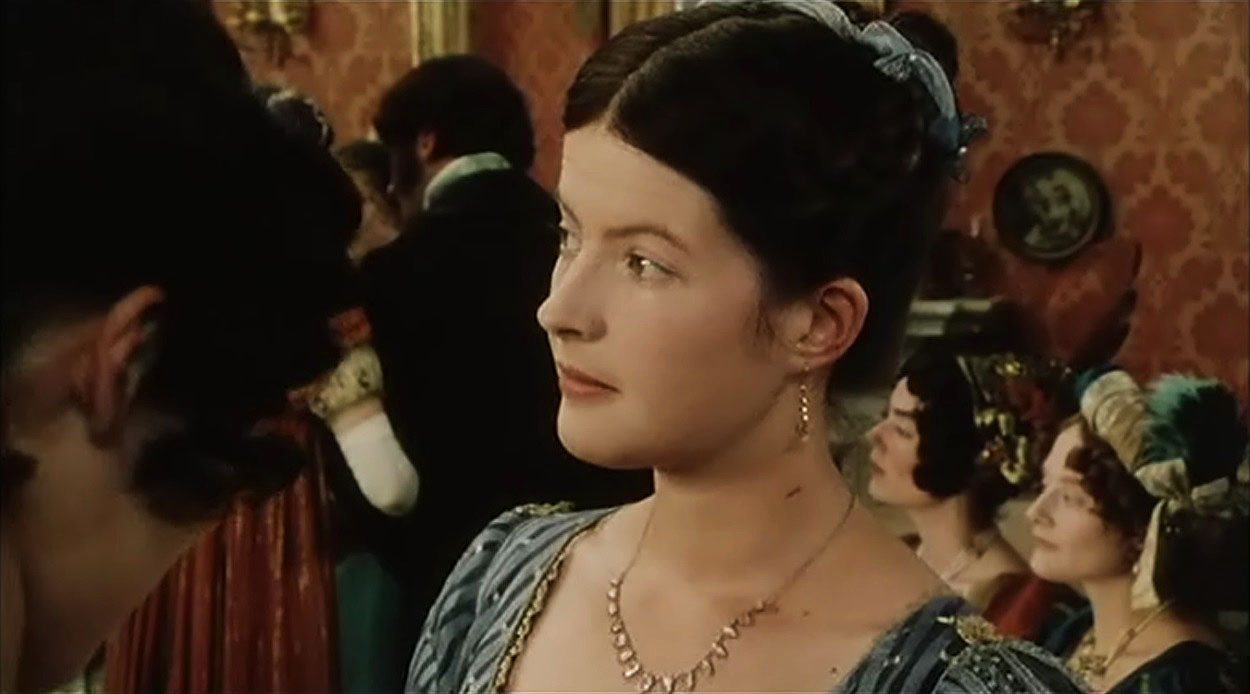
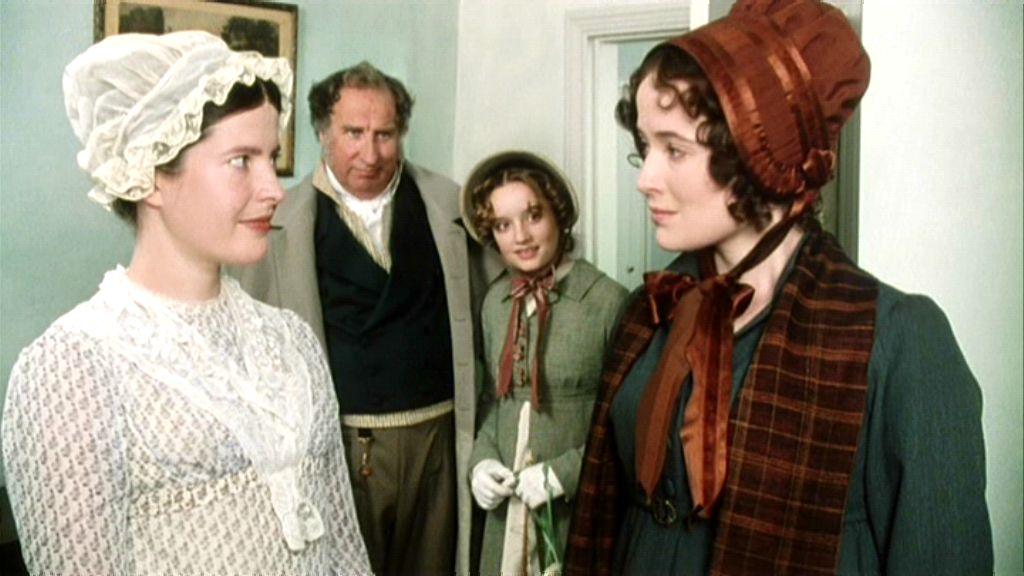
Now, I am quite aware that Lucy Scott portrays Charlotte Lucas admirably well and is actually quite beautiful. So, if we think of a 27-year-old spinster who doesn’t have beauty, did the 1995 adaptation get it right? By comparison to the 2005 version where Claudie Blakely plays Charlotte Lucas, we can see the comparison between the two in terms of beauty. It may well be that the 2005 adaptation perhaps portrayed Charlotte Lucas in a more plain light, if that makes sense. What do you think?
Defining Trait: Pragmatism
Charlotte’s defining trait is pragmatism. She tells Elizabeth outright: “I’m not romantic, you know. I never was. I ask only a comfortable home.” So, unlike Elizabeth, who dreams of love, Charlotte accepts the harsh reality of her world: a woman of her standing must marry for security, not passion.
Despite their close friendship, Charlotte and Elizabeth see the world very differently. Elizabeth is an idealist; she believes marriage should be built on love and respect. Charlotte, being a realist, is fully aware that the only way to secure a comfortable future is through a practical match.
The Shocking Decision: Accepting Mr. Collins
So, when Charlotte announces her engagement to Mr. Collins, Elizabeth is shocked and disappointed. (“It was such a humiliating spectacle!”) She knows she’s marrying “one of the stupidest men in England.” She cannot fathom how her friend would willingly marry a man as foolish as Mr. Collins.
But Charlotte, ever the pragmatist, knows that Mr. Collins, despite his ridiculous nature, offers her something invaluable: security. (“Our cousin, Mr. Collins, is not the cleverest of men, perhaps. But he is respectable, and as far as fortune goes, he’s an eligible match.”)
Family Pressure and Economic Reality
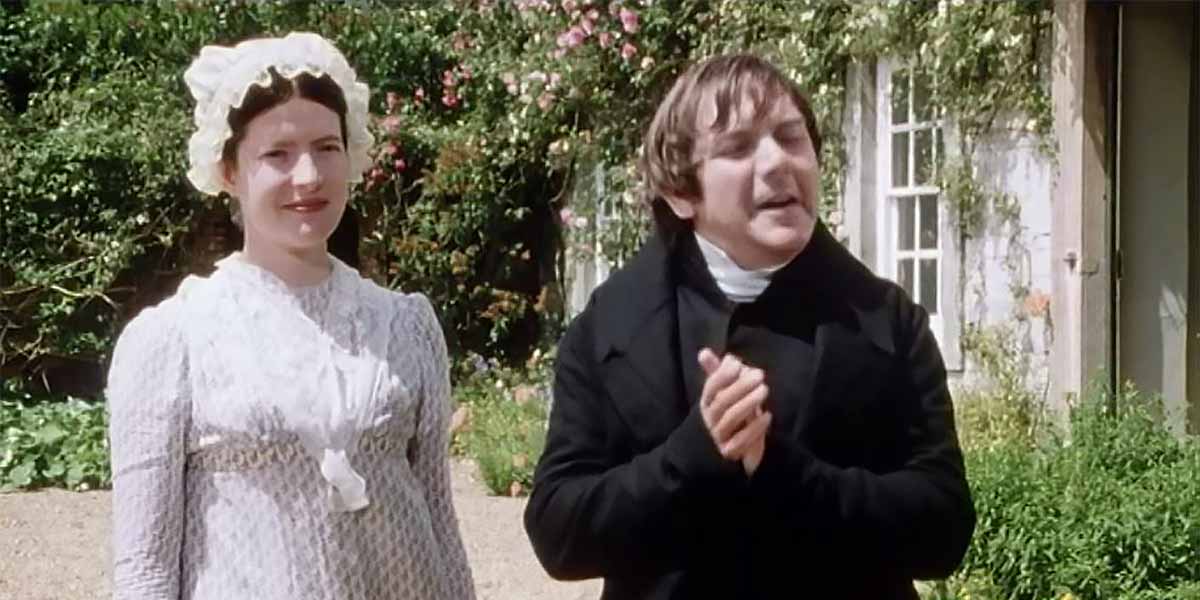
Charlotte Lucas’s decision to marry Mr. Collins was not made in isolation; it was deeply influenced by her family’s social standing and financial situation. Unlike Elizabeth Bennet, who had a somewhat more secure (if still precarious) position, Charlotte was under intense pressure to secure her future, both for her own sake and for that of her family.
The Lucas family, though respectable, was in a socially precarious position. Sir William Lucas was a former merchant who had been knighted when he served as mayor of Meryton. However, while this elevated the family’s social standing, it did not come with substantial wealth or an estate. So, unlike Mr. Bennet, who owned Longbourn (even if it was entailed away), Sir William did not have a landed estate that could provide security for his children. His knighthood gave him prestige but not riches, which meant his family was still largely middle-class. Sir William retired from trade, which meant he had no active source of income beyond his existing wealth.
With multiple children to provide for, the Lucas family’s resources were stretched thin. Charlotte, therefore, as the eldest daughter at twenty-seven, was at risk of becoming a lifelong financial burden on her parents. (“Think what you’re doing. You’d be a simpleton indeed if you let your fancy for Wickham lead you to slight a man of ten times his consequence.”)
The economic reality meant that Charlotte’s marriage was not just about her own security; it was about lessening the financial strain on her family. As the eldest daughter, Charlotte had a duty to marry well so that she would not remain dependent on her parents. Unlike the Bennet sisters, who were all unmarried, Charlotte had young siblings whose futures also had to be considered. If Charlotte remained single, she would remain a financial liability, requiring ongoing support. Her presence in the home might diminish her younger sisters’ marriage prospects, as they too would need dowries, and potential suitors might see the family as overburdened. (“Then she should leave him in no doubt of her heart; she should show more affection even than she feels, not less, if she is to secure him.”)
By marrying Mr. Collins, Charlotte removes herself as a financial responsibility, allowing her parents to focus on securing good marriages for her younger siblings. In contrast to Elizabeth, who had more time and better prospects, Charlotte didn’t have the luxury of waiting for love. She was already considered a spinster, and if she didn’t marry soon, she risked never marrying at all.
Avoiding a Future of Dependence
During the Regency era, unmarried women from respectable families had few options. They could remain dependent on their parents and risk becoming an unwanted burden. They could live with married siblings, where they would have little independence. Or they could work as a governess—a low-paid and often miserable profession for a gentlewoman. Charlotte likely saw these possibilities and chose the best option available to her.
Mr. Collins, while foolish, at least provided a home of her own at Hunsford rather than being shuffled between relatives, financial security (ensuring she would never have to worry about money), and a husband with stable employment (since his position as a clergyman was secure). By marrying Mr. Collins, Charlotte avoided lifelong dependency on her family or charity. She made a calculated, rational choice, ensuring she would have her own household and a respectable position in society.
Charlotte’s Perspective on Marriage
Charlotte’s perspective on marriage is starkly different from Elizabeth’s. To her, love is not a requirement. In fact, she believes love is too unpredictable to be a reliable foundation for marriage. (“Do you think it incredible that Mr. Collins should be able to procure any woman’s good opinion? Because he was not so happy as to succeed with you.”)
Instead, she values stability, respectability, and a comfortable home. (“I ask only a comfortable home… and considering Mr. Collins’s character and situation in life, I am convinced that my chance of happiness with him is as fair as most people can boast on entering the marriage state.”)
She also proves to be highly strategic in managing her marriage. Once married, Charlotte minimizes her time with Mr. Collins, encouraging him to spend much time in the garden or with Lady Catherine. (“Mr. Collins tends the gardens himself and spends a good part of every day in them.” “I encouraged him to be in his garden as much as possible.”) This allows her to maintain as much personal space as possible, proving that she is far from passive. She’s simply playing the hand she was dealt.
Analyzing the Marriage: Compromise or Victory?
Charlotte’s marriage to Mr. Collins is one of the most analyzed in Pride and Prejudice, often viewed as either a tragic compromise or a pragmatic victory. But was Charlotte merely settling for security, or was she making a calculated decision based on her understanding of Mr. Collins’s character?
One key reason Charlotte likely felt confident in managing Mr. Collins was that he was malleable. Despite his pomposity and obsession with social status, he is easily led by those he perceives as his superiors (firstly, Lady Catherine de Bourgh, and later, in a more subtle way, Charlotte herself). Early on, Charlotte recognizes that Mr. Collins, though tiresome, is not cruel or unkind. He does not demand a passionate, loving wife; he needs a competent partner who can handle his eccentricities while maintaining a respectable household.
Evidence of Charlotte’s strategy can be seen in how she manages their home at Hunsford. While Elizabeth visits after Charlotte’s marriage, she notices that Charlotte has cleverly structured their daily routine to minimize the time she spends with Mr. Collins. (“So it often happens that a whole day passes in which we have not spent more than a few minutes in each other’s company.”) This suggests that Charlotte is not merely enduring her marriage but actively shaping it to be as bearable and functional as possible. (“I find that I can bear the solitude very cheerfully… I find myself quite content with my situation, Lizzie.”)
Would Mary Have Been a Better Match?
There’s also the question (which I reiterate every time I do a video) as to whether Mary might have been more suitable as Mr. Collins’s wife. Some wonder if Mary, who is bookish, serious, and seemingly in want of admiration, might have been a more obvious match. However, Mary lacks Charlotte’s practicality and social awareness. She’s more awkward and self-righteous, which would have made it difficult for her to manage Mr. Collins’s long-winded speeches and excessive flattery towards his betters. Unlike Charlotte, Mary would have struggled under the weight of Collins’s constant need for validation, likely retreating into herself rather than handling him with quiet efficiency.
Additionally, Charlotte’s upbringing under Sir William Lucas may have uniquely prepared her for marriage to Mr. Collins. Like Mr. Collins, Sir William is obsessed with social status, making frequent and often irrelevant references to his knighthood and his past visits to St. James’s court. (“No doubt you attend assemblies at St. James’s court, Miss Bingley?”) Charlotte likely spent her entire life listening to long-winded, self-important speeches and learning how to tactfully nod while thinking of something else. Her ability to tolerate pompous but ultimately harmless men made her particularly suited to handling a husband like Mr. Collins.
Was Charlotte Happy?
Was Charlotte happy in the marriage? It’s a difficult question to answer. While she may not have found love, she certainly found security: a comfortable home, financial stability, and a role she knew she could manage. In a society where women had few options, Charlotte’s choice, though unromantic, was logical and intelligent.
Charlotte as Elizabeth’s Foil
Charlotte Lucas and Elizabeth Bennet represent two opposing but equally valid responses to the social pressures placed on women in the early 19th century. Charlotte is realistic and strategic, while Elizabeth is idealistic and bold. Through their friendship, Jane Austen presents two different ways women navigate their world: one through pragmatism and the other through defiance.
Charlotte is one of the most important foils to Elizabeth in Pride and Prejudice. While the two women share a close friendship and similar social standing, they have starkly different perspectives on love, marriage, and personal happiness. Through Charlotte, Jane Austen presents an alternative path to Elizabeth’s romantic ideals, forcing readers to consider whether Charlotte’s practicality is a sign of wisdom or resignation.
They both have different views on marriage. Elizabeth insists that marriage must be based on mutual love and respect, and she rejects Mr. Collins’s proposal even though it would have secured her financial future. She tells him bluntly: “You could not make me happy, and I am convinced I am the last woman in the world who could make you so.” Charlotte, on the other hand, believes that happiness in marriage is largely a matter of chance and that securing financial stability is far more important than romantic attachment. (“I’m not romantic, you know. I never was. I ask only a comfortable home.”)
This moment highlights how different their priorities are. Elizabeth is willing to risk poverty for the chance of love, while Charlotte is willing to sacrifice romance for a secure future. Charlotte’s decision to marry Mr. Collins then serves as a realistic counterpoint to Elizabeth’s idealism. Jane Austen uses her to show what many women in Charlotte’s position would have had to do.
Mr. Collins himself acts as a lens through which we see their different perspectives. Elizabeth finds Mr. Collins insufferable, pompous, and utterly ridiculous. She is repulsed by the idea of being married to him and laughs at his long-winded speeches. However, Charlotte views him differently—not as a romantic partner but as a practical solution to a social problem. Charlotte’s situation forces her to be practical, while Elizabeth’s relative youth and charm allow her to be idealistic. Jane Austen uses this contrast to underline the harsh realities of marriage and the social contract, where love is often a luxury few can afford.
So, was Charlotte’s path a wiser one, or was Elizabeth right to hold out for love? That’s a question that continues to spark debate among Jane Austen fans even to this day.
The Outcome and Legacy
Charlotte’s decision to marry Mr. Collins was a pragmatic one, designed to secure her future and provide stability. Though she carefully managed their relationship to ensure they spent little time together, their marriage would ultimately fulfill its expected purpose—that of producing an heir. Evidence of this comes from a letter Mr. Collins writes to Mr. Bennet later in the novel, where he alludes to the expectation of a child. This not only confirms that the marriage followed expected conventions but also has significant implications for the future.
With the child on the way, the Collins family line would continue, reinforcing Charlotte’s success in securing not just her own future but that of her offspring. Mr. Collins, as the entailed heir to Longbourn, would eventually inherit the Bennet family estate. If the child were male, the estate would remain within the Collins family for another generation, securing their position in society. Though Charlotte may not have married for love, her decision ensured that she would eventually become the mistress of Longbourn—a far better fate than the financial precarity she would have faced as a spinster. In many ways, her calculated approach to marriage proved successful: she not only secured her own comfort but also ensured a lasting legacy for her family.
(Now, did I read somewhere that after the accepted proposal, Lady Lucas started to muse and wonder when Mr. Bennet might die so that her daughter could become the mistress of Longbourn? Now, do you remember I did a Q&A on that last video?)
Questions for the Audience
I’ve also got some questions here. So, I’ll throw them out. Somebody had said it would be nice if you could do a video where you actually, you know, give your answers, but I think it’s better just to throw it out there, don’t you think? Anyway:
Do you think Charlotte made the right decision in marrying Mr. Collins, or do you think she could have held out for something better?
If you were in Charlotte’s position—plain, with little fortune and no other prospects—would you have done the same?
Do you see Charlotte as a tragic figure trapped by society’s expectations or a clever woman who played the system to her advantage? (And I think I covered that a little earlier, don’t you?)
How do you think Charlotte and Mr. Collins’s marriage actually worked out on a daily basis? Do you think she was as miserable as Elizabeth assumed?
Charlotte and Elizabeth represent two very different views on marriage. Do you think Elizabeth was being too judgmental of Charlotte’s choice? (And I think that’s probably more to do with the fact that they were friends, so they would have known each other quite well, wouldn’t they?)
If Pride and Prejudice were set in today’s world, how do you think Charlotte’s fate would have changed? Would she still feel pressured to marry someone like Mr. Collins? (I personally can answer that by saying: No, I don’t think it would have, because in today’s society, there wouldn’t have been the same constraints, would there? Because women are more independent, which is the way the world is and should be.)
(“We seem to have been designed for each other.” makes me laugh with the wave)
Conclusion: The Complex Survivor
Charlotte Lucas is one of the most complex and underappreciated characters in Pride and Prejudice. Unlike Elizabeth, she doesn’t have the privilege of waiting for love. Instead, she makes the best decision available to her, securing a future that is stable and respectable. Her story reminds us that not all women in Jane Austen’s time had the freedom to marry for love and that sometimes practicality had to triumph over romance.
What do you think of Charlotte’s decisions? Do you see her as a tragic figure or a clever survivor? Let me know in the comments. I personally think she was a clever survivor, very strategic.
And the way that Jane Austen weaves her story in amongst Jane and Bingley, and Darcy and Elizabeth, but provides us with almost… like there’s three ways that a marriage can go: Bingley and Jane—utter love (hahaha); Darcy and Elizabeth—full of pride and prejudice, but resolution occurs; and then of course, Mr. Collins and Charlotte—with the pragmatic decision to secure a future. I loved that. I love the way that those three storylines, you know, carry the… um… the whole novel along.