傲慢与偏见系列人物画像实录Part01

嗨,欢迎收看新一期视频!这次依然关于《傲慢与偏见》——准确说是1995年版剧集。继我之前解析达西与丽兹亲密瞬间(就是那个拇指摩挲的经典镜头)的视频后,我觉得分享在迷你剧中发现的其他细节会很有趣。这些多是转瞬即逝的微妙时刻,演员们通过细微表演为我们揭示了角色内核。
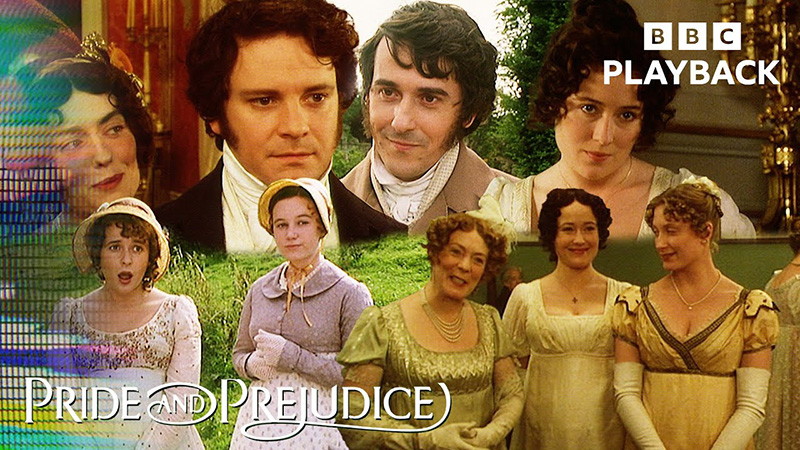
可能是导演刻意安排,也可能是演员在长时间研习剧本后对角色产生了深刻理解,使得表演浑然天成——根本无需指导。
演员的职责是让角色令人信服,而作为观众,我们应当捕捉那些稍纵即逝的表演细节并相信所见——至少在戏剧影视中理应如此。
因此我重刷剧集,精选出这些瞬间。它们或许是明显失误,也可能是演员奉献的绝妙毫秒级演绎,不反复观看根本难以察觉。
不知是否该加个”免责声明”——毕竟有些镜头一旦看见就再难忘却。闲话少叙,让我们开始吧!估计得费些功夫剪辑呢。
第一集细节观察
第一集中有段基蒂和莉迪亚争夺bonnet(女帽)的戏码。玛丽在背景处读书,班纳特太太则如常为她的”nerves(神经)”焦虑不已。
“姑娘们,非要把我的神经撕碎吗?基蒂,把帽子给她算了!”
“可这是我的!你什么都让她抢走!”
这场戏展现了班纳特家的日常图景。但我想聚焦玛丽——当闹剧上演时,她始终坐在桌边读书。饰演玛丽的露西·布莱尔斯通过细微表情让我们窥见角色特质:她对姐妹们的容忍中始终带着厌烦。
观众注意力往往被追逐打闹的基蒂和莉迪亚吸引,很少注意到玛丽的表演。虽可说这个镜头本不需要她出现,但她的存在与面部表情恰恰强化了班纳特家姐妹的 hierarchy(长幼秩序)。让我们放大玛丽的镜头再看一次:
“不,你不该抢它。妈妈…莉迪亚,基蒂!姑娘们,非要把我的神经撕碎吗?唉,给她吧基蒂!”
“可这是我的!你什么都让她抢走!”
结尾那个轻微的摇头——堪称完美。
同样在第一集,卢卡斯家舞会场景中,达西长时间伫立观察众人。夏绿蒂此时点出达西频繁注视丽兹的现象。
“达西先生经常看你呢,丽兹。真不知为何。”
饰演夏绿蒂的露西·斯科特通过一个转瞬即逝的眼神,透露出她早已洞悉真相。一切尽在眼神中!哈哈哈。
“达西先生经常看你呢,丽兹。”
她的评论发生在——我认为她早已看穿一切。虽然非常短暂,但在那一刻她捕捉到了真相流露。仿佛她已预见丽兹的未来,仅用一个眼神就将这个信息传递给观众。绝佳演技!
尼日斐花园的邂逅
下一个场景中,步行探病的丽兹在尼日斐花园偶遇达西。我不必赘述科林·费尔斯看到丽兹时的反应设计——安德鲁·戴维斯在《傲慢与偏见》制作花絮中已有精彩阐述,我会把链接放在此处。
但在这个场景中,我发现了两个意味深长的细节。让我们来看:
“班纳特小姐!”
“达西先生!我来探望家姐。”
“步行来的?”
“如您所见。能否劳烦带我去见她?”
您发现了吗?
我的第一个观察:达西抿紧嘴唇的反应,几乎像在默念”顽固倔强的姑娘!”。虽然转瞬即逝,但这个反应透露出达西意识到自己被将了一军,却因礼仪规范无法直言。
第二个细节:丽兹的翻白眼动作。这或许并非即兴发挥,可能来自导演指示,但确是完美反应——堪称对男性老套搭讪语的终极回应。就像听到”天堂一定少了位天使”这种话时,女性会露出的厌烦的表情。
让我们慢速重温:
“步行来的?”
“如您所见。能否劳烦带我去见她?”
简直精妙!
打破第四面墙
接下来这个场景非常重要,我不明白剧组为何保留它。您听过”打破第四面墙”这个概念吗?
第四面墙是分隔故事与现实世界的虚构屏障。这个术语源自剧场:三面墙包围舞台(后台与两侧),无形的第四面墙为观众而设。我们观看的屏幕就是这面墙,它如同单向镜——观众能理解故事,但故事意识不到观众的存在。
若打破这面墙,就打破了约定俗成的规则。这种现象称为”打破第四面墙”,也可理解为故事开始意识到自身被观看。
我在1995版《傲慢与偏见》中发现了两处这样的突破。这是第一处:吉英与伊丽莎白正要离开尼日斐庄园。
“恕我直言,尽管您那位出色的彬格莱先生人很好,但我从未如此庆幸离开某个地方。”
您看到了吗?这简直是对第四面墙规则的公然无视。可爱的苏珊娜·哈克凝视镜头的时间显然超出了合理范围。她是故意的吗?剧组为何保留这个镜头?
让我们慢速重看并放大特写:
“我从未如此庆幸离开某个地方。”
我可能吹毛求疵了。
第二集细节观察
接下来是第二集。这是个简短场景:所有角色围坐餐桌时,柯林斯先生、莉迪亚和玛丽之间的互动。
“精心准备些女士们总是受用的巧妙恭维。”
此处我想聚焦玛丽。在我看来,剧情暗示着玛丽可能暗藏小心思——她想向柯林斯先生展示自己才是妻子的完美人选。当柯林斯先生想邀请丽兹跳头两曲舞时,玛丽几乎预判到自己会被邀请。
“伊丽莎白小姐,请您赏光。”
正是玛丽支使吉英到花园请柯林斯先生帮忙解读”教区文件中的两行字”。
“她在《四教区布道集》里发现一段完全无法理解的段落。”
而这个餐桌场景中,她似乎沉醉于柯林斯先生关于如何演练恭维之辞的解释,全程保持微笑。但当莉迪亚发出嗤笑时,玛丽几乎厌恶地扭开头。
下一个场景展现了镜头走位调度,同时也是另一处打破第四面墙的”罪证”。
“若我美丽的表妹愿应允放开我…”
首先,大卫·班伯饰演的柯林斯先生前倾请示”美丽表妹”放行。这个动作本身无妨,但会完全挡住饰演菲利普斯太太的林恩·法利。因此他前倾时本应看不见她——这本是个滑稽场景,但问题在于林恩·法利为确保入镜,竟随着柯林斯先生移动并直勾勾盯着镜头。糟糕。
“若我美丽的表妹愿应允放开我…”
第二集最后个细节关于尼日斐舞会。丽兹与达共舞时试图引导对话——或至少让他开口说话。
“我本可以点评下舞伴数量。”
我欣赏詹妮弗如何演绎出丽兹的 exasperated(恼火)。她早知道本就不愿与他共舞。鼓腮吹气的音效被保留,说明这绝非意外失误。
“难道跳舞时谈话也要遵循规则?”
“是的,有时这样最好。”
背景里玛丽与柯林斯先生交谈时罕见地露出了笑容。
“是的,有时这样最好。”
“那我们正好享受沉默的优势。”
第三集细节观察
第三集我只捕捉到两处。我知道该更努力些。
第一处关于背景表演。我当过不少群演,在片场时必须表现得仿佛自己的故事线与镜头主线毫无关联,但即便在背景中也需真实可信。
“我理解并钦佩您的忍耐——并非…但看到达西先生当众落座,实在令我担忧,尤其在彬格莱先生府上…”
您发现了吗?
这是丽兹与韦克姆穿行梅里顿时的对话,但我想强调的是背景活动。演员走位绝非偶然——镜头让莉迪亚、基蒂、丹尼和桑德森始终保持在丽兹与韦克姆构成的三角区域内。观众看戏时通常不会注意背景,但一旦发现就再难忽视。
“我理解并钦佩您的忍耐——并非…但看到达西先生当众落座,实在令我担忧,尤其在彬格莱先生府上…”
我认为这是神级的调度设计:镜头既追随主线对话,又透过背景展现莉迪亚的调情场景。但最妙的是朱莉娅·萨瓦哈抓丹尼军帽的动作——这很可能不是剧本设计,或许是她的即兴发挥。
“达西先生当众落座,但在彬格莱先生府上…”
“啊,凯瑟琳·德·鲍尔夫人”。伊丽莎白果断发表意见后,夫人询问其年龄。
“请问您芳龄几何?”
“既然我有三个妹妹都已长大成人,夫人总不好指望我坦白年龄吧。”
“班纳特小姐,您肯定不到二十岁。何必隐瞒年龄呢?”
这场戏中,玛丽亚和柯林斯先生惊惶失措,但夏绿蒂欣喜的表情格外引人注目——她仿佛在说:”说得好,丽兹!”另外两人则似乎预感到冲突即将爆发。
“既然我有三个妹妹都已长大成人,夫人总不好指望我坦白年龄吧。”
“班纳特小姐,您肯定不到二十岁。何必隐瞒年龄呢?”
第三集最后,您或许记得我在上期视频中探访贝尔顿庄园时——当时不确定达西是从哪个窗口眺望。但可能是这个窗口,或是此处任意一扇窗。我们看到他凭窗远眺…
杰西卡·帕维茨基在评论中指出:
“达西凭窗而望的场景(29分22秒)似乎取自主楼凸出的塔楼。站在建筑正面时位于右侧,以约45度角朝向楼体中部拍摄,因为画面左边缘可见拐角;更左侧还有一扇明显退深很多的窗户。”
实际位置在这里:
“威克姆先生的父亲是位极可敬的人,他长期管理我们家产,先父对他十分宠爱,格外尊重。”
第四集:莉迪亚的踉跄
第四集中,莉迪亚即将前往布莱顿。她正要登上马车时踉跄了一下。
“好啦,该走啦。再见吉英,再见丽兹。要是见到适合你们的如意郎君,我会立刻传信。天哪!要是我摔破头该多好笑!”
“我倒巴不得如此。”
不确定这是否经过设计——肯定需要动作指导(毕竟要保护朱莉娅),还是我们常见的穿帮镜头。但朱莉娅·萨瓦哈补救得如此自然,剧组便保留了这一幕。
“好啦,该走啦。再见吉英,再见丽兹。要是见到适合你们的如意郎君,我会立刻传信。哦天哪!要是我摔破头该多好笑!”
当看到背景演员(男仆)急忙伸手扶稳朱莉娅,以及其他演员的反应时,能感受到他们对朱莉娅真实的担忧。
“要是见到适合你们的如意郎君,我会立刻传信。哦天哪!要是我摔破头该多好笑!”
或许从班纳特太太背后拍摄的是原始镜头,导演随后调转机位重拍并捕捉了他们的反应(此时是表演)。虽不确定,但衔接天衣无缝。除非能采访到当事人,否则永远无法得知真相。或许朱莉娅愿意联系我们解惑。
第五、六集:达西的柔软面与最终观察
最后来到第五、六集。首先我们窥到达西柔软的一面。我确信他已爱上伊丽莎白,这肯定是给科林的表演指导。分享这个镜头以便大家理解剧情发展。
接下来场景中,达西让卡罗琳·彬格莱难堪。这场戏很重要,但需仔细观察。
慢动作中能看到达西冷峻的决意,仿佛在说:”逮到你了!看你怎么狡辩。”
“…我所认识的女子。”
随后达西带着爱犬走过长廊。这个设计很巧妙:既展现一家之主睡前巡视宅邸,又通过科林·费尔斯三个微妙表情暗示他意识到自己终于击败了卡罗琳·彬格莱,或许取得了最终胜利——至少占了上风。
动态镜头中注意这些瞬间:
转瞬即逝的微笑——眨眼就会错过
舌尖轻舔嘴角品味胜利
快速呼气如释重负
最后再次闪过宣告胜利的浅笑
达西先生并不严峻傲慢也无偏见。他或许复杂,但确实流露了情感——尽管可能极其不情愿。
结论与最终思考
以上就是我对1995版《傲慢与偏见》的部分观察。还有更多细节吗?您是否有所发现?欢迎留言告知。最后分享一个场景。这不算严格意义上的观察,但…
“我确实喜欢他。我爱他。他真的没有不得体的傲慢,完全亲和可敬。您若知道他多么慷慨大度…我并非始终爱他,但此刻我深爱着他。”
我始终想不通为何安德鲁·戴维斯与苏·伯特维瑟删除了我认为至关重要的情节——伊丽莎白告知父亲达西先生代偿威克姆债务、促成莉迪亚与威克姆婚事,从而挽救班纳特家族声誉的真相。
2005年电影版保留了这段。或许安德鲁和苏认为乡间小径上伊丽莎白与达西第二次求婚时的对话已足够交代。
这使得95版在重要时刻的呈现稍显不足,但我选择原谅。因为我熟知故事,宁愿相信镜头停止转动后丽兹终究告诉了父亲。或许完美的改编本不存在,但那些被捕捉的毫秒瞬间,终将成为穿越时空的永恒电波,在无数热爱者的心间激起永不消退的涟漪。
Hi, welcome to another video! In fact, another Pride and Prejudice video—well, the 1995 version anyway.
On the back of my original video where I highlighted the scene where Darcy has a little intimate moment with Lizzie (you know, the thumb rubbing scene), I thought it might be interesting to share some other observations I found in the mini-series. These are mostly short, almost miserable moments where the actors might offer us, the viewer, a little insight into the characters they’re portraying.
It might be that they’ve had direction, or it might be that in spending so much time learning their parts and lines, they themselves have gained an understanding into the character, and as such, it all starts becoming natural—they don’t need direction at all.
Now, it’s the actor’s job to make the characters believable, and as a viewer, we should be observing something that is passing and believe what we are seeing—at least in a drama, play, or movie.
So what I’ve done is rewatched the series and picked out some of those moments. They’re either going to be glaring errors or just some marvelous microsecond moments offered by the actors that you might not ordinarily catch unless you watch the series over and over.
I wonder if I should put in a disclaimer—you know, one scene you can’t unsee. Anyway, let’s get started. I think it’s going to take me a little bit of editing.
Episode 1 Observations
In Episode 1, we have the scene where Kitty and Lydia are squabbling over a bonnet. Mary is in the background reading a book, and Mrs. Bennet is, as she often is, seen fretting about her nerves.
“Girls, would you tear my nerves into shreds? Let her have it, Kitty, and be done.”
“But it’s mine! You let her have everything that is mine!”
Okay, so the scene is showing a little backstory into the life of the Bennet household. But it’s Mary I’d like to focus on. She’s sitting at the table reading her book as the events unfold. Lucy Briers, playing Mary, offers us a glimpse into her character—she’s tolerant of her siblings and yet always exasperated.
When the scene unfolds, the viewer is kind of transfixed on Kitty and Lydia chasing each other around the table, but probably rarely watches what Mary is offering up. You could argue that she didn’t need to be in the scene at all, and yet, having her there and offering up her facial expressions really lends itself to help confirm the hierarchy of the Bennet sisters.
Let’s look at it again, and I’ll zoom in on Mary:
“No, you should not have it. Mama… Lydia, Kitty! Girls, would you tear my nerves into shreds? Oh, let her have it, Kitty, and be done!”
“But it is mine. You let her have everything that is mine.”
And that little shake of a head at the end—perfection.
Also in Episode 1, we see the scene where they’re attending the party at Lucas Lodge, and Darcy is spending a lot of time standing around watching everyone. In this scene, Charlotte observes that Darcy is looking at Lizzie a great deal.
“Mr. Darcy looks at you a great deal, Lizzie. I cannot think why.”
Lucy Scott, playing Charlotte, gives us a fleeting moment with her eyes that seem to reveal that she has an understanding as to why Darcy looks at Lizzie. It’s all in the eyes! Hahaha.
“Mr. Darcy looks at you a great deal, Lizzie.”
Her comment comes moments before—I think she’s figured it all out. It’s all very fleeting, but in that instance, she spotted the reveal. It’s as if she’s seen Lizzie’s future unravel itself, and she offers that to us, the viewer, with just a flick of the eyes. It’s great acting.
“Mr. Darcy looks at you a great deal, Lizzie.”
Darcy and Lizzie’s Encounter at Netherfield
In this next scene, Lizzie arrives on foot to visit Jane, who is ill in bed at Netherfield, and she encounters Darcy walking the grounds. Now, I shan’t sport with your intelligence and talk about the direction Colin Firth was given regarding his reaction to seeing Lizzie—Andrew Davies gives an enlightening detail in the making of Pride and Prejudice, and I’ll leave a link up here for you.
But in this scene, there are two moments that I’ve spotted that are quite telling. Let’s take a look:
“Miss Bennet!”
“Mr. Darcy! I am come to enquire after my sister.”
“On foot?”
“As you see. Would you be so kind as to take me to her?”
Did you spot them?
My first observation is Darcy’s reaction—he’s almost thinking, “Obstinate, headstrong girl!” as he purses his lips. It’s quite fleeting, but the reaction gives us a telling insight into how Darcy is aware that he’s been put in his place. But due to decorum and civility, he can’t react verbally.
The second thing I observe is Lizzie’s rolling of her eyes. This probably isn’t something that’s out of place, and it’s likely a stage direction, but it’s a perfect reaction—a response to every useless chat-up line given from a man to a woman. You know, like “Heaven must be missing an angel!” and how very exasperated a woman might respond to such a comment.
Let’s have a look again in slow motion:
“On foot?”
“As you see. Would you be so kind as to take me to her?”
Just perfect!
Breaking the Fourth Wall
Okay, the next scene is an important one, and I don’t know why production left it in. Have you heard the phrase “breaking the fourth wall” or just “the fourth wall”?
Now, the fourth wall is an imaginary wall that separates the story from the real world. This term comes from theater, where the three surrounding walls enclose the stage (the back and the two sides), and the invisible fourth wall is left out for the sake of the viewer. The fourth wall is the screen we’re watching, and we treat this wall like a mirror—a one-way mirror. The audience can see and comprehend the story, but the story cannot comprehend the existence of the audience.
If you break the wall, you break the accord. This is called “breaking the fourth wall,” and it can also be described as the story becoming aware of itself.
I’ve spotted this twice in the 1995 adaptation of Pride and Prejudice. Here’s the first instance: Jane and Elizabeth are leaving Netherfield.
“I’m sorry to say it, but notwithstanding your excellent Mr. Bingley, I’ve never been so happy to leave a place in my life.”
Did you see that? It was a blatant disregard for the rule of the fourth wall. The lovely Susannah Harker stared right at us for what seems a longer time than she should have. Did she do it on purpose? Why did production leave it in?
Let’s watch it again in slow motion, and I’ll do a close-up:
“I’ve never been so happy to leave a place in my life.”
I’m probably nitpicking.
Episode 2 Observations
Okay, next up, Episode 2. This is a quick scene involving Mr. Collins, Lydia, and Mary, while all the characters are sat around the dining table.
“To offer those little delicate compliments which are always acceptable to ladies.”
What I want to focus on here is Mary. In my opinion, the way the story is spinning, there’s a little backstory going on relating to Mary and her possible desire to show Mr. Collins that she could be the perfect choice for him as a wife.
When Mr. Collins wants to have the first two dances with Lizzie, it’s Mary who almost anticipates herself being asked.
“Of soliciting yours, Miss Elizabeth.”
It’s Mary who sends Jane into the garden to ask Mr. Collins to help with “two lines from the diocese.”
“She has found a passage in Four Diocese Sermons that she cannot make out at all.”
And in this scene, at the dining table, she seems enamored with Mr. Collins’s explanation on how he rehearses his compliments for the ladies, and she’s smiling as he does it. But when Lydia lets out a groan, Mary turns her head almost in disgust.
The next scene is an exercise in blocking for the camera, as well as another culprit in breaking the fourth wall.
“If my fair cousin will consent to release me…”
Firstly, David Bamber as Mr. Collins leans forward to ask to be released by his “fair cousin.” This in itself is fine, but it would leave Lynn Farley, playing Mrs. Phillips, blocked behind his head. So leaning forward like that, you wouldn’t see her. This in itself is a funny scene, yet it looks quite comical.
But the issue is, of course, that Lynn Farley has to make sure she’s in line with the camera, and as such, she kind of moves with Mr. Collins but stares straight at the camera. Yikes.
“If my fair cousin will consent to release me…”
The final observation for Episode 2 revolves around the dance at Netherfield. Lizzie and Darcy are engaged in the dance, and she’s trying to make conversation with him—or at least get him to have a conversation.
“I might remark on the number of couples.”
What I like is how Jennifer really shows us how Lizzie is exasperated. She knew she didn’t want to dance with him anyway. I don’t think it’s a happy accident because they kept the sound in—you know, of her blowing out the air when she puffed her cheeks.
“Do you talk by rule, then, when you’re dancing?”
“Yes, sometimes it is best.”
Also, in the background, we see Mary and Mr. Collins talking together, and it appears that Mary is smiling—and that’s a rare thing.
“Yes, sometimes it is best.”
“Then we may enjoy the advantage of saying as little as possible.”
Episode 3 Observations
For Episode 3, I’ve only caught two things. I know I should make a greater effort.
Okay, the first one relates to background acting. I’ve done my fair share of background acting, and when you’re on set, you have to carry yourself as if your own part of the story has nothing to do with the main story being captured by the camera. But it still has to be believable and real, even if it’s in the background.
“I do understand and I admire your forbearance. Not that… but give me a moment’s concern to see Mr. Darcy publicly sat down, but in Mr. Bingley’s house…”
Did you spot it?
Okay, this one is Lizzie and Wickham talking as they’re walking through Meryton, but it’s what’s going on in the background that I kind of want to highlight. Again, I don’t think it’s a happy accident regarding the placing of the actors. The camera keeps Lydia, Kitty, Denny, and Sanderson in the little triangle between Lizzie and Wickham for almost the whole scene.
I suppose when a viewer is watching a scene, they’re not particularly observing what’s going on in the background, but once you’ve seen it, you can’t unsee it.
“I do understand and I admire your forbearance—not that… but, give me a moment’s concern to see Mr. Darcy publicly sat down, but in Mr. Bingley’s house.”
This is a magical piece of direction, in my opinion. Not only is the camera following the conversation, but it’s also giving us another glimpse into Lydia’s flirting. For me, though, it’s the way that Julia Sawalha grabs Denny’s hat—which is probably not scripted. I think that was perhaps Julia doing some improvisation.
“Mr. Darcy publicly sat down, but in Mr. Bingley’s house.”
Ah, Lady Catherine de Bourgh. Lizzie has given her opinion quite decidedly, and Lady Catherine asks how old she is.
“Pray, what is your age?”
“With three younger sisters grown up, your ladyship can hardly expect me to own it.”
“Miss Bennet, you cannot be more than 20, I am sure. Therefore, there is no need to conceal your age.”
Now, in this scene, Mariah and Mr. Collins are aghast and shocked, but it’s Charlotte’s happy expression that catches my eye. Charlotte’s like: “Go, Lizzie, go!” And the other two seem sure that some kind of confrontation is about to occur.
“With three younger sisters grown up, your ladyship can hardly expect me to own it.”
“Miss Bennet, you cannot be more than 20, I’m sure. Therefore, there is no need to conceal your age.”
Finally, for Episode 3, you might remember when I was at Belton House in my previous video—I was not sure what room Darcy was staring out of from the window. But the window possibly is this one, and any one of these windows here. We see him kind of looking out…
Now, Jessica Pawlitzki pointed this out in a comment that she left:
*”For the scene where Darcy is looking out of the window (29 minutes, 22 seconds), it appears to be one of the towers jutting out from the main part of the building. The one on the right side of the building when you’re standing in front of it, shot at somewhat of a 45-degree angle toward the middle of the building, as there is a corner visible at the left edge of the frame; and a window even further to the left that appears to sit quite back a lot.”*
So, here’s where it actually was:
“Mr. Wickham is the son of a very respectable man who had the management of our family estates, and my own father was fond of him and held him in high esteem.”
Episode 4: Lydia’s Stumble
In Episode 4, Lydia is off to Brighton. She’s about to get into the carriage, and she stumbles.
“Well, I must go. Goodbye, Jane. Goodbye, Lizzie. If I see any eligible beaux for you, I’ll send you word express. Lord! What a laugh if I should fall and break my head.”
“I wish you would.”
Now, I’m not sure if this would have been planned—it would have certainly taken some direction, that’s for sure (you know, not to hurt Julia), or if it was one of the bloopers that we often see. But in this case, Julia Sawalha recovered so well that they may have kept it in.
“Well, I must go. Goodbye, Jane. Goodbye, Lizzie. If I see any eligible beaux for you, I’ll send you word express. Oh, Lord! What a laugh if I should fall and break my head.”
When you watch the reaction of the background actor (as the footman) quickly reaching to Julia and perhaps trying to save her from falling, and then the reaction of the other actors, it looks to me like genuine concern from them for Julia.
“If I see any eligible beaux for you, I’ll send you word express. Oh, Lord! What a laugh if I should fall and break my head.”
Perhaps the camera angle from the view behind Mrs. Bennet was the original footage, and then the director turned the camera around and reshot the scene but captured their reactions (which were then acted). I’m not sure, but it seems seamless. But you never know—unless we get to chat to one of them, I’m not sure if we would ever know. Perhaps Julia would like to get in touch.
Episodes 5 and 6: Darcy’s Soft Side and Final Observations
Okay, finally from Episodes 5 and 6. First, we get a glimpse into Darcy’s softer side. I really think he’s in love with Elizabeth, and I’m sure this would have been direction given to Colin. I thought I would just show that so that we could see how the storyline was unfolding.
Right, in this next scene, Darcy puts down Caroline Bingley. The scene is important, but you have to look closely.
Firstly, in slow motion, we see the cold determination from Darcy that kind of suggests “Gotcha! Get out of that if you can.”
“…of my acquaintance.”
The next part of the scene sees Darcy walking down the long corridor with his dogs. This is a clever scene because it not only shows us the master of the house checking all is in order before retiring, but we get three very subtle facial expressions from Colin Firth that suggest to me, anyway, that he realizes he’s actually beaten Caroline Bingley and that he may finally have had the last laugh—or at least the upper hand.
Let’s see it in motion, and I’ll point the moments out:
There’s a quick smile—blink and you’ll miss it.
There’s the tongue licking the corner of the lips, savoring the victory.
There’s the quick puffing out of air, signifying relief.
And then again, ever so fleeting, the final smile signifying victory.
Mr. Darcy isn’t stern, proud, or prejudiced at all. He might be complex, but he certainly shows his emotions, although perhaps quite unwillingly.
Conclusion and Final Thoughts
Okay, that’s it for some of the observations I’ve made from the 1995 adaptation of Pride and Prejudice. Are there any more? Have you spotted any? Drop me a comment, let me know.
What I’ll do is leave you with one last scene. It’s not an observation, while it is, but…
“I do like him. I love him. Indeed, he has no improper pride. He’s perfectly amiable. If you only knew his generous nature. I didn’t always love him, but I love him now so very dearly.”
I cannot, for the life of me, think why Andrew Davies and Sue Birtwistle left out what I consider to be a crucial element of the storyline—and that is Lizzie telling her father of Mr. Darcy’s involvement in paying Wickham’s debts and bringing about the wedding of Lydia and Wickham, thus saving the Bennets from shame and ridicule.
They put it in the 2005 version. Perhaps Andrew and Sue felt it was covered enough in the conversation between Lizzie and Darcy in the country lane when he makes his second kind of proposal.
It kind of makes the 1995 version lacking in that one important moment, but I shall forgive them. Because I know the story, and I shall pretend that Lizzie told her father when the cameras had stopped rolling.