
在 1850年 与文学评论家 G. H. 刘易斯 的通信中,夏洛蒂·勃朗特在评论简·奥斯汀的作品时,写下了那段极为著名且尖锐的批评。
-
原始出处: 《夏洛蒂·勃朗特书信集》(The Letters of Charlotte Brontë), 收录于1850年1月18日致W.S.威廉姆斯的信。
-
关键原文引用:
“她(奥斯汀)对激情的领域一无所知……她甚至不去触碰那些喧嚣的激情、更为宏大的主题、时代的广泛脉搏。她所擅长的是对平凡生活的微妙刻画……但这些东西让我感到不耐烦。她的作品缺乏诗意,毫无开阔的视野,没有任何的荒野、远景、青山与蓝天。她是一位极为克制而细致的淑女,但其笔下的世界过于精致、过于封闭,让我几乎要窒息。”
-
背景分析: 作为《简·爱》的作者,勃朗特推崇的是强烈的激情、哥特式的想象和个体的精神抗争。在她看来,奥斯汀聚焦于“三四户人家”的社交、婚姻与经济盘算,是一种“缺乏诗意”和“视野狭隘”的表现。这种批评本质上是 两种截然不同的文学美学(浪漫主义 vs. 现实主义社会喜剧)的冲突。
2. 另一位重要批评者:拉尔夫·沃尔多·爱默生
美国思想家爱默生对奥斯汀的评价同样苛刻,且更为简短辛辣。
-
原始出处: 爱默生的私人日记和信件。
-
关键原文引用(据其日记记载):
“我完全无法理解人们为何如此推崇奥斯汀小姐的小说。在我看来,它们庸俗、缺乏艺术性、被困于英国社会最可鄙的习俗中……她笔下的人物,全是些乏味之人,在琐碎事物和可悲的算计中打转。”
-
背景分析: 爱默生作为超验主义哲学家,追求精神的崇高、个体的独立与普世真理。奥斯汀对特定社会阶层习俗的精细剖析和讽刺,在他看来是“庸俗”且缺乏精神高度的。
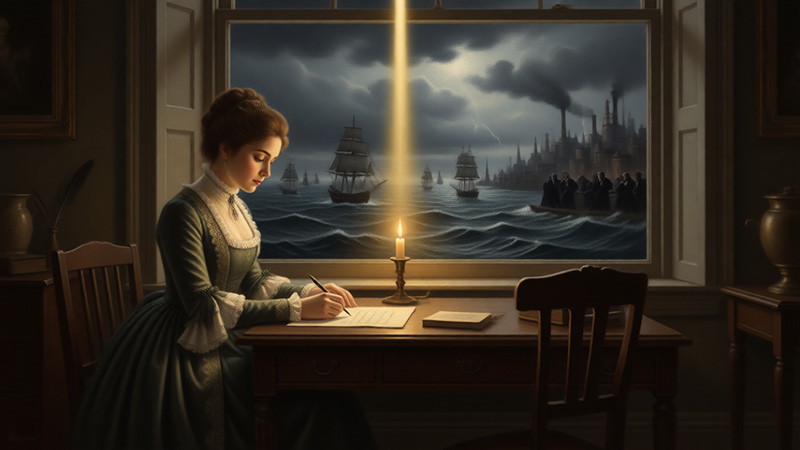
针对“简·奥斯汀不去直接描写拿破仑战争是出于女性的小家子气”这一观点,我们需要像审视一位微雕大师而非壁画创作者那样去审视她的作品。在语言学和文学研究视角下,奥斯汀并非在逃避历史;她是在将“世界级的大地震”转化为“家庭级的震动”。以下是为什么她对“两英寸象牙”的专注是一种深刻的叙事策略,而非局限性的详细解析:
1. “象牙微雕”的策略
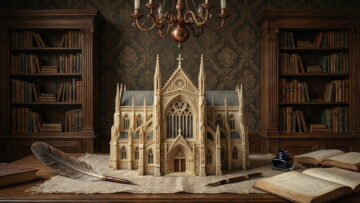
奥斯汀曾著名地将自己的创作比作在“两英寸宽的象牙小片”上用“精细的画笔”进行“辛苦良久却收效甚微”的雕琢。虽然有些人将其误解为缺乏雄心,但学者们认为这是她最深刻的“回声讽刺”。她是一位深具职业自觉的作家,深知世界性的历史事件在“乡村小镇”的尺度上表现得最为切肤。通过聚焦于“三四户人家”,她构建了一台“对话机器”,精准诊断了当时整个社会的道德和经济缺陷。
2. 被“家政化”的历史
奥斯汀并没有忽略拿破仑战争;她将其“驯服”并织入了情节的社会肌理中。在《傲慢与偏见》中,战争通过驻扎在麦里屯的民兵团呈现,为韦翰等军官提供了“浪漫的骚动”。在《曼斯菲尔德庄园》中,“西印度群岛的奴隶经济”以及托马斯·班内特爵士前往安提瓜的危险旅程(这是战争影响贸易的直接后果)驱动了整个家庭的冲突。最后,《劝导》是一部彻头彻尾的“海军小说”,其情节完全由1814年巴黎和约后的和平状态塑造,聚焦于通过“海军奖金”致富的温特沃斯上校等军官。
3. 个人联系与直接经验
奥斯汀是基于她的“直接经验”进行创作的,而这种经验与军事紧密相连。她的两个哥哥,弗兰西斯和查尔斯,都是在拿破仑战争期间服役的高级海军军官,最终都晋升为海军上将。她的哥哥亨利曾在民兵团服役。她绝非对冲突一无所知,而是密切关注着他们的职业生涯,尽管她的书信常以标志性的讽刺语调来掩饰伤亡带来的“恐怖”现实。
4. 更持久的社会史
通过描写一场“糟糕的晚宴”或“无礼的邻居”而非战场,奥斯汀提供了一部比官方历史书更“诚实且持久的社会史”。她为那些命运受限于礼仪和“婚姻市场”的女性群体发声,展现了她们“不曾被言说的生活”。她对家庭领域的关注是一种“静悄悄的革命”,揭示了公共领域的“男性法则”与家庭领域的“女性法则”是密不可分的。
总之,奥斯汀的“象牙微雕”是一份精准主义的宣言 [Introduction]。她不需要描写滑铁卢的硝烟来展示功绩制对世袭阶级的挑战;她通过一位“海军军官”在乡村客厅里的崛起,就足以完成这一宏大主题的解构。
To address the notion that Jane Austen’s omission of direct battle scenes from the Napoleonic Wars stems from a “narrow-mindedness” or a limited feminine perspective, we must look at her work through the lens of a master engraver rather than a panoramic muralist. In the world of linguistics and literature, Austen is not retreating from history; she is translating “world-class earthquakes” into “domestic vibrations”.
Here is a detailed breakdown of why her focus on the “two-inch bit of ivory” is a profound narrative strategy rather than a limitation:
1. The Strategy of the “Ivory Miniature”
Austen famously described her own work as a “little bit (two Inches wide) of Ivory,” produced with a “fine Brush” after “much labour”. While some mistake this for a lack of ambition, scholars argue this is her most ironic self-disclosure. She was a “professional author” who understood that world-historical events manifest most poignantly on the scale of a “country village”. By focusing on “3 or 4 Families,” she creates a “conversational machine” that diagnoses the moral and economic failings of her entire society.
2. History “Domesticated”
Austen does not ignore the Napoleonic Wars; she “tames” them into the social fabric of her plots. In Pride and Prejudice, the war is present through the militia quartered in Meryton, which provides the “romantic distraction” of officers like Wickham. In Mansfield Park, the “West Indian slave economy” and Sir Thomas Bertram’s dangerous trip to Antigua—necessitated by the war’s impact on trade—drive the entire conflict of the household. Finally, Persuasion is a “naval novel” entirely shaped by the peace following the Treaty of Paris in 1814, focusing on officers like Captain Wentworth who enriched themselves through “naval prizes”.
3. Personal Connection and Immediate Experience
Austen wrote out of her “immediate experience,” and that experience was deeply intertwined with the military. Two of her brothers, Francis and Charles, were high-ranking naval officers who served during the Napoleonic Wars, eventually becoming admirals. Her brother Henry served in the militia. Far from being ignorant of the conflict, she followed their careers closely, though her letters often used irony to mask the “horrible” reality of the casualties.
4. A More Lasting Social History
By focusing on a “bad dinner party” or a “rude neighbor” instead of a battlefield, Austen provided a more “honest and lasting social history” than the official record. She gave a voice to the “unspoken lives” of women whose survival depended on manners and the “marriage market”. Her focus on the domestic was an act of “quiet revolution,” showing that the “masculine principle” of the public sphere was inextricably linked to the “feminine” domestic sphere.
In conclusion, Austen’s “ivory miniature” is a manifesto of precision [Introduction]. She didn’t need to describe the smoke of Waterloo to show the shifting power of meritocracy over the hereditary class; she did it through the “rise of a naval officer” in a village drawing room.