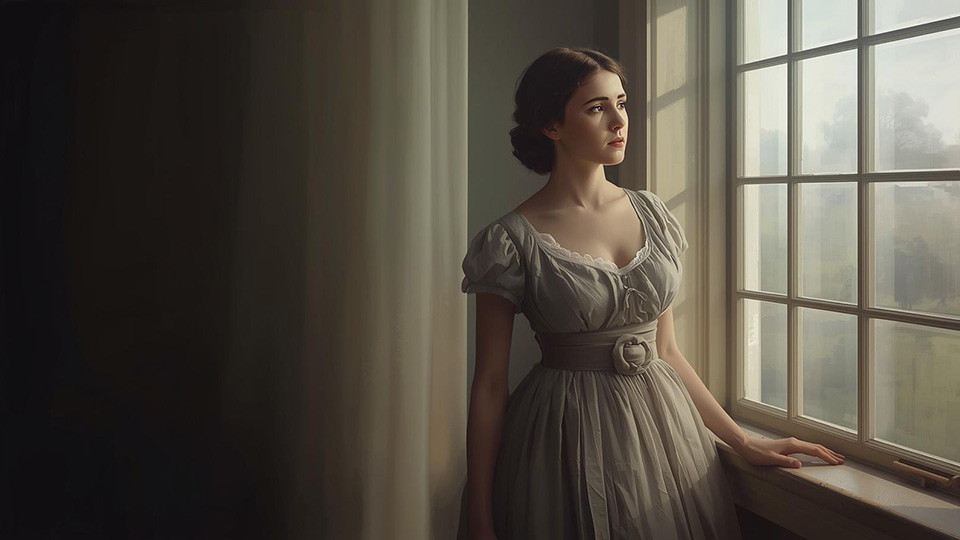

如果说小说是一场智力竞赛,简·奥斯丁就是那位不仅制定规则,还会在你以为看清局势时悄悄移动终点线的顶级博弈大师。她的作品不仅仅是关于“三四户人家”的婚嫁故事,更是一台精密运转的“对话机器”,通过语言的微雕,刻画出人性的千姿百态。我们可以从以下几个维度,细致解构她的叙事策略与风格艺术:

• 自由间接引语: 这是她最著名的叙事技巧,叙述者的声音悄然滑入人物的思想、情感和语气中。它让读者得以深入人物的意识,同时叙述者保持一种微妙且常带反讽的距离感。这创造了一种以非凡的亲密感了解人物内心世界的体验。
• “轻快、明亮、闪耀”: 奥斯汀本人用这些词形容《傲慢与偏见》。这代表了她的早期风格——充满活力、机智诙谐,并充斥着尖锐的反讽。
• 对话驱动的叙事: 她的小说常被形容为“对话机器”。她运用精彩的对话而非冗长的描述来揭示人物性格并推动情节。
• 叙事权威的解构: 尽管使用第三人称叙述,但她的叙述者并非传统意义上“全知全能”的。她常采用受限视角(如伊丽莎白的),引导读者产生误解,从而制造“叙事模糊性”或“评价模糊性”。
• 反讽与社会观察: 她运用“回声语言”来模仿并解构社会偏见。例如,《傲慢与偏见》著名的开篇并非绝对真理的陈述,而是对痴迷婚姻的士绅阶层“群体思维”的模仿。
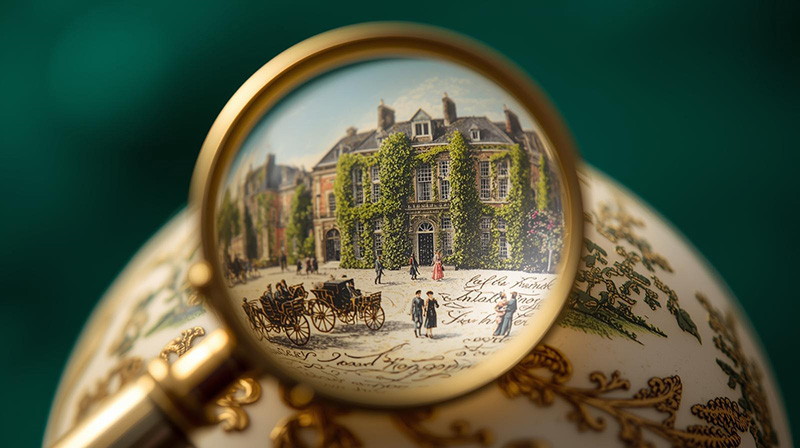
• 微型画家: 她曾将自己的作品比作在“两英寸宽的象牙微雕”上进行的精细描绘,专注于“一个乡村村庄里三四户人家”错综复杂的社会关系网。
早期文学影响
简·奥斯汀的早期创作植根于18世纪文学传统。她深受塞缪尔·理查森的影响,尤其是其作品《查尔斯·格兰迪森爵士》。弗朗西斯·伯尼是另一位重要榜样,奥斯汀从其作品中学习了社会喜剧的艺术和精炼的对话。她还阅读并借鉴了玛丽亚·埃奇沃思、沃尔特·司各特爵士以及“道德诗人”威廉·柯珀等作家的作品。她的早期作品常是对当时流行的感伤小说和哥特小说的滑稽戏仿。
学术研究视角
现代研究已将奥斯汀从一个“与世隔绝的微型画家”转变为一位“政治小说家”和“叙事权威大师”。学者们运用多种视角研究她:
• 文体学/语言学视角: 分析自由间接引语以及她如何操纵读者对“真相”的追寻。
• 历史/社会学视角: 将她置于法国大革命、拿破仑战争和奴隶贸易的背景下考察。
• 女性主义视角: 审视单身女性面临的经济压力及其为自主权进行的斗争。
“双重声音”与叙事模糊性
奥斯汀的“双重声音”将叙述者的言辞与人物的价值观相融合。这常常导致混淆——且是刻意为之。在《艾玛》中,短语“艾玛无法原谅她”跨越章节隔断的重复,展现了从人物主观思想到客观叙事事实的转变。这种“模仿性认同”使叙述者几乎人格化,如同用第三人称写成的日记。
轭式搭配在奥斯汀技艺中的运用
奥斯汀运用“轭式搭配”来创造尖锐、讽刺的张力。一个来自其早期作品《杰克与爱丽丝》的经典例子描述一个角色“俘虏了所有佳人的芳心与腿脚”。这里,“俘虏”同时应用于浪漫的隐喻(赢得芳心)和字面的身体伤害(腿脚被陷阱夹住)。通过将高雅的浪漫与平庸的现实强行并置,她嘲弄了文学陈规。
风格的珠宝隐喻
评论家常将奥斯汀的机智形容为“水晶般剔透”、“宝石般”或“闪耀”。奥斯汀自己也用“象牙微雕”来比喻其写作的费时与精准。在她的小说中,真实的珠宝常象征社会联盟与婚姻。例如,《艾玛》中的埃尔顿太太意图用她的珍珠“闪耀”,这成为讽刺她虚荣心以及她成功却肤浅的社会化的标志。
“叙事延迟”的作用
奥斯汀是一位“叙事大厨”,她运用延迟来增强悬念和心理深度。通过隐藏信息——如《艾玛》中的秘密婚约或《傲慢与偏见》中关于威克姆的真相——她迫使读者从被动观察者转变为主动的侦探。这种延迟使得像伊丽莎白这样的角色得以经历“认知重构”,达到真正的自我发现。
回溯作为开篇策略
奥斯汀很少从“一张白纸”开始。她运用“倒叙”来打破绝对起点的幻象。在《劝导》中,小说开始前“八年”的失恋往事赋予了安妮·埃利奥特这个人物独特的“厚重感”和分量。这种基于历史的铺垫使得角色的社会与经济动机显得必然且真实。
If a novel is an intellectual game, then Jane Austen is the grandmaster who not only sets the rules but also quietly moves the finish line just as you think you’ve grasped the field. Her works are not merely matchmaking tales of “three or four families”; they are, more profoundly, a finely tuned “conversation machine” that, through the minute carving of language, sculpts the manifold forms of human nature.
• Free Indirect Discourse (FID): This is her most celebrated narrative technique, where the narrator’s voice slips into the thoughts, feelings, and tone of a character. It allows the reader to inhabit a character’s consciousness while the narrator maintains a subtle, often ironic, distance. It creates an experience of getting to know the inner life of a character with remarkable intimacy.• “Light, Bright, and Sparkling”: Austen herself used these words to describe Pride and Prejudice. It represents her early style—vibrant, witty, and filled with sharp irony.• Dialogue-Driven Narrative: Her novels are often described as “conversational machines.” She uses brilliant dialogue rather than long descriptions to reveal character and drive the plot.• Deconstruction of Narrative Authority: Although she uses third-person narration, her narrators are not always “all-knowing” in the traditional sense. She often adopts a restricted perspective (like Elizabeth’s) to lead readers into misunderstandings, creating “narrative ambiguity” or “evaluative opacity.”• Irony and Social Observation: She uses “echoic language” to mimic and deconstruct social prejudices. For instance, the famous opening of Pride and Prejudice is not a statement of absolute truth but an imitation of the “group-think” of the gentry society obsessed with marriage.• The Miniature Painter: She famously compared her work to fine brushwork on a “little bit of ivory, two inches wide,” focusing on the intricate social webs of “three or four families in a country village.”
Jane Austen’s early work was rooted in 18th-century traditions. She was deeply influenced by Samuel Richardson, particularly Sir Charles Grandison. Frances Burney was another vital model, from whom Austen learned the art of social comedy and refined dialogue. She also read and engaged with writers like Maria Edgeworth, Sir Walter Scott, and the “moral poet” William Cowper. Her early writings were often hilarious parodies of the sentimental and Gothic novels popular at the time.
Modern scholarship has moved from seeing Austen as a “sheltered miniature painter” to recognizing her as a “political novelist” and a “master of narrative authority.” Scholars use various lenses to study her:• Stylistic/Linguistic Perspective: Analyzing FID and how she manipulates the reader’s search for “truth.”• Historical/Sociological Perspective: Placing her in the context of the French Revolution, the Napoleonic Wars, and the slave trade.• Feminist Perspective: Examining the economic pressures on single women and their struggle for autonomy.
Austen’s “double voice” blends the narrator’s speech with the character’s values. This often leads to confusion—intentionally so. In Emma, the repetition of the phrase “Emma could not forgive her” across a chapter break shows a shift from a character’s subjective thought to a objective narrative fact. This “mimetic identification” makes the narrator seem almost personified, like a diary written in the third person.
Austen uses “Zeugma” to create sharp, satirical energy. A classic example from her early work Jack and Alice describes a character who “wound the hearts & legs of all the fair.” Here, “wound” applies to a romantic metaphor (winning hearts) and a literal physical injury (legs caught in mantraps). By yoking high-flown romance with mundane reality, she mocks literary clichés.
Critics often describe Austen’s wit as “crystalline,” “gem-like,” or “sparkling.” Austen herself used the metaphor of the “ivory miniature” to describe the labor-intensive, precise nature of her writing. In her novels, actual jewelry often symbolizes social alliance and marriage. For example, Mrs. Elton in Emma “means to shine” with her pearls, which serves as a satirical marker of her vanity and successful, yet superficial, socialization.
Austen is a “narrative chef” who uses delay to heighten suspense and psychological depth. By withholding information—like the secret engagement in Emma or the truth about Wickham in Pride and Prejudice—she forces the reader to move from being a passive observer to an active detective. This delay allows characters like Elizabeth to undergo “cognitive remodeling” and reach true self-discovery.
Austen rarely starts with a “blank slate.” She uses “analepsis” (flashbacks or history) to破除 the illusion of an absolute starting point. In Persuasion, the “eight years” of lost love before the novel begins give Anne Elliot’s character a unique “volume” and weight. This grounding in history makes the social and economic motivations of the characters feel inevitable and real.
In Pride and Prejudice, 5,000 pounds means different things depending on whether it is income or capital:• As Annual Income: If a man like Mr. Bingley has 4,000 or 5,000 pounds a year, he is at the top of the social ladder—a wealthy gentleman of leisure. In today’s terms, this is roughly equivalent to an annual income of 250,000 pounds (approx. 2.3 million RMB).• As Total Capital: The Bennet sisters are to share a 5,000-pound trust. Invested at a typical 4% interest rate, this produces only 200 pounds a year for the entire family. If split five ways, each girl would have only 40 pounds a year—a “pitifully small” sum that would barely provide for a single woman, making marriage an economic necessity.