凯瑟琳·德·布尔夫人:傲慢与偏见中的贵族特权

“确实如此,但这实在令人烦忧。我深感不悦!”
作为《傲慢与偏见》中最具威慑力的人物之一,凯瑟琳夫人以铁腕统治着罗辛斯庄园,不仅操纵着周围人的生活,更试图掌控外甥达西先生的命运。在她嚣张气焰之下,隐藏着一个拼命固守过去的女人——她是处于变革边缘的僵化贵族制度的遗老,也是一个如同她女儿安妮般的悲剧人物,始终未能成为她命定该成为的模样。
让我们深入探究凯瑟琳·德·布尔夫人。
作为凯瑟琳·费茨威廉小姐出生的她,身为伯爵之女,天生就是贵族阶级。这使她凌驾于绝大多数社会阶层之上,但也将其禁锢于条框森严的世界——每个生活细节都被预期所束缚。与当时许多贵族女儿一样,她的人生轨迹从一开始就清晰注定:嫁入豪门、生儿育女、维持家族影响力。
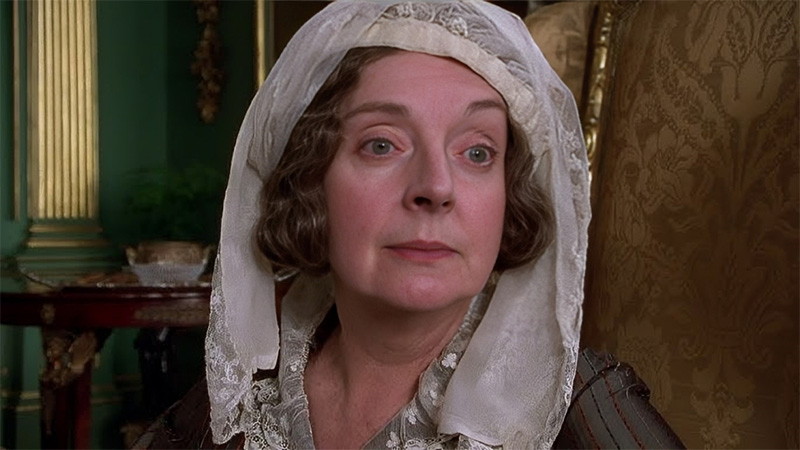
她究竟是天生专横,还是被环境塑造成这般自认特权的模样?我们不得而知。但可以肯定的是,她以不容置疑的自信拥抱自己的阶级特权。”她不会因你衣着简朴就看低你。她只是喜欢保持阶级区。”
“感激不尽,柯林斯先生,这可真是莫大赞誉。”
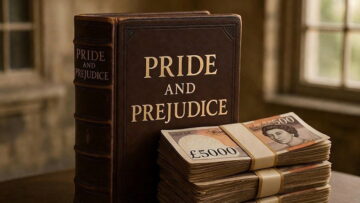
她的丈夫刘易斯·德·鲍尔爵士始终是个谜般的存在,仅在其离世时被提及。鉴于凯瑟琳夫人强势的个性,他很可能是个沉默低调、被妻子锋芒掩盖的人物。亦或者,他或许是唯一能克制她傲慢的人,因而他的离世使她再无约束。”仅玻璃镶嵌当初就耗资逾600英镑”——丈夫的离世使凯瑟琳夫人完全掌控罗新斯庄园及其财富,成为小说中最富有的女性之一。
她是否需要崇拜与奉承?她与柯林斯先生的关系便是明证。她将他留在身边,深知他会对自己言听计从。女儿安妮始终是个孱弱沉默的存在,仿佛只是母亲野心的棋子。凯瑟琳夫人究竟是真心关爱安妮,还是仅将其视为自己未竟梦想的延伸?这一点值得深思。
凯瑟琳夫人最出名的是她专横的性格、越界的建议和对自己优越性的绝对自信。她自认是所有领域的权威——无论是育儿、音乐、建筑还是婚姻。”若你母亲同意,你父亲自然不会阻拦。女儿对父亲从来无足轻重。” 她最著名的台词完美捕捉了这种心态:”若我曾学过,定能成为真正的高手。”
表面看来这只是她傲慢的又一例证。但这也可能是罕见的脆弱时刻——承认自己从未成为理想中的模样。理解凯瑟琳夫人需要我们认识到:她不仅是暴君,更是一个在另一种人生中本可非凡的女性。
虽然小说未明确说明柯林斯如何获得教区牧师职位,但凯瑟琳夫人显然在其中发挥了关键作用。”复活节接受神职后,我有幸获得尊贵的凯瑟琳·德·鲍尔夫人庇护。” 作为回报,柯林斯对她阿谀奉承,从不吝啬赞美之辞:”第三点——或许我本该首先提及——这是我高贵女恩主的特别推荐。”
他的效忠看似夸张,但或许暗藏算计:柯林斯深知自己终将继承浪搏恩产业,届时便不再需要凯瑟琳夫人的庇护。他的过度奉承可能只是达成目的的手段。讽刺的是,习惯操控他人的凯瑟琳夫人,或许正被这个自以为掌控之人所操纵。若我是柯林斯,自然会放弃牧师职位成为地主乡绅。
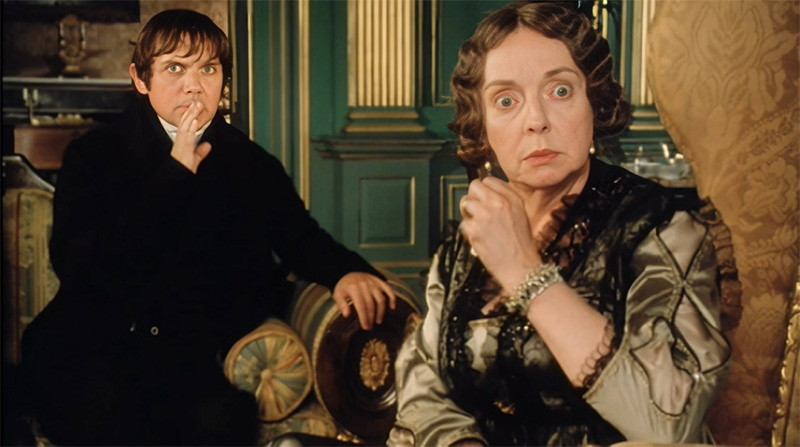
尽管如此,凯瑟琳夫人享受这种毫无质疑的顺从,柯林斯的存在如同她重要性的镜像,强化她在小世界中的支配地位。无论她是真心看重其崇拜,还是仅仅享受自我满足,这段关系本质是各取所需。
凯瑟琳夫人与不同角色的互动往往显露其态度变化。面对柯林斯、威廉·卢卡斯爵士甚至伊丽莎白时,她施加支配——居高临下说话、 无视对方观点、 维护自身优越性。
但在外甥达西与费茨威廉上校面前,微妙变化悄然发生。与对待社会地位低下者不同,她在达西二人面前明显收敛了气焰。”失陪,请代我向凯瑟琳·费茨威廉夫人致歉。” 她仍保持权威感,却未见在其他场合的毫无约束的傲慢。取而代之的是一种暗示相互尊重的交谈方式。这种关系动态转变表明:凯瑟琳夫人视他们为平等者,或至少是无法轻易操控的对象。
达西在钢琴场景中那个微妙白眼,我想正反映了这种认知。他深知姨母本性——她那爱管闲事、专横跋扈的做派。他对此心知肚明,并以这种微妙方式表达了对她的容忍极限。
“你们在谈什么?跟班纳特小姐说什么呢?我也要参与谈话。”
此刻观察凯瑟琳夫人角色地位的转变十分有趣。我曾在上表演课时学到”角色地位”的概念——如果你是临时演员(假设你有经纪人,或是演员——我确实从事表演),当有人邀请你临时出演一个角色却不告知完整故事线及与其他角色关系时,首先要问导演的就是:”我的角色地位如何?”
约翰·克里斯和双朗尼小品完美诠释了这点。请看这个片段:
“我鄙视他,因为我是上流阶级;我敬重他,因为他是上流阶级;但我看不起他,因为他是下层阶级。我自有分寸。”
这揭示了一个原理:作为角色,你对某些人具有优越感,对另一些人则存在自卑感,而你的演绎方式将反映这种等级关系。
凯瑟琳·德·鲍尔夫人展现的正是如此:虽然她对伊丽莎白、柯林斯和威廉·卢卡斯爵士保持居高临下的姿态,但与达西和费茨威廉相处时,她的地位却是平起平坐的——绝非卑微,确属同等层级。
简·奥斯汀在塑造人物时也运用了这种角色地位设定。显然,伊丽莎白相对于夏绿蒂或许更具气势,对柯林斯先生更是绝对压制,她总能展现这种权威感。
因此,凯瑟琳夫人在达西和费茨威廉面前确实展现了性格的转变。
《傲慢与偏见》中最激烈的场景之一,当属凯瑟琳夫人突然造访浪搏恩的桥段。
“她人在哪儿?这是客厅吗?我是凯瑟琳·德·鲍尔夫人。”
她要求与伊丽莎白·班纳特对话。在1995年改编版的花园对峙戏中,两人展开了一场唇枪舌剑的较量,各自坚守立场。
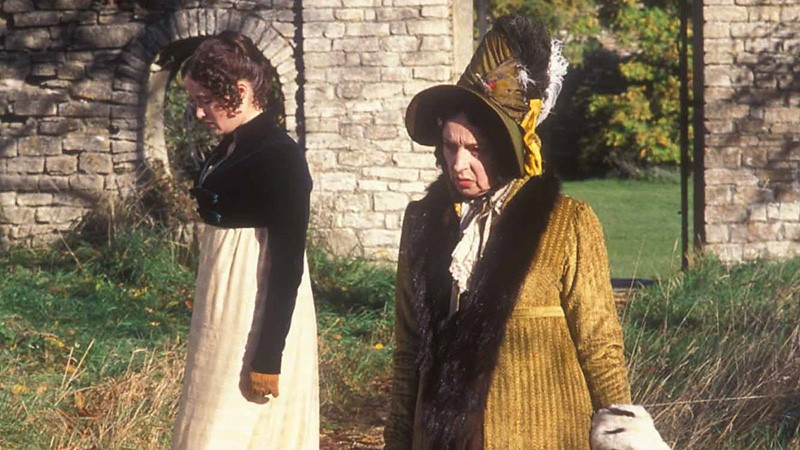
凯瑟琳夫人此行旨在阻止伊丽莎白与达西先生结婚。她坚称这桩婚事绝无可能——达西早已注定要娶她女儿安妮,而伊丽莎白的卑微出身根本配不上他。
此刻,凯瑟琳夫人彻底暴露了对阶级界限的执念。她起初以社会地位为由贬低伊丽莎白,但伊丽莎白反击道:”他是绅士,我是绅士的女儿——至少在门第上是平等的。”
被迫承认这点后,凯瑟琳夫人立即转换论点,转而攻击伊丽莎白的母亲及其亲戚缺乏教养且出身商贾。
“你母亲是什么人?你舅父舅母又是什么来路?休想瞒过我他们的底细。”
她更加坚信伊丽莎白不配嫁入豪门——这还没提(虽然我现在要提)那桩臭名昭著的私奔事件。”彭伯利门楣之耻”对吧?”难道要让彭伯利的门楣遭此玷污?”
这段交锋完美捕捉了当时僵化的社会等级制度——财富与家世被视为决定性特质。凯瑟琳夫人对这些原则的激烈维护,不仅体现出她守护传统的渴望,更暴露了她拼命维持一个正在逐渐崩塌的世界的绝望。
“我不与你道别,班纳特小姐。也不会代问候你母亲。你不配得到这份礼节。”
但正是她对伊丽莎白的刁难与挑战,阴差阳错地促成了伊丽莎白与达西的姻缘。
“凯瑟琳夫人向我透露了与您的会面。或许可以说,她的干预产生了与她预期完全相反的效果。”
她的发难迫使达西重新审视自己的真心。若无凯瑟琳夫人干涉,达西是否还能鼓起勇气冲破世俗规范再次求婚?或许与加德纳夫妇一样,凯瑟琳夫人本人也在无形中成为了联结二人的推手。
“这让我燃起了前所未有的希望。若您当真决心拒绝我,定会坦然相告。”
1940年改编版本甚至将凯瑟琳夫人塑造为达西的”共谋”——她实际上促成了二人的结合(虽然这与原著相差甚远)。剧中达西似乎亟需姨母的助攻:
“她适合你,达西。你自幼被宠坏,但我们不能继续纵容你。你需要的是敢与你抗衡的女子。”
而其他改编版本中,伊丽莎白与达西完婚后,凯瑟琳夫人始终在背景中怒不可遏, presumably(想必)与达西家永久决裂。
但小说实则暗示了不同走向:奥斯汀明确记载,伊丽莎白与达西婚后某日,凯瑟琳夫人曾亲赴彭伯利拜访。
为何如此?是出于好奇——忍不住想看看伊丽莎白如何适应新身份?她是否预期会看到伊丽莎白在她认为不配的位置上手足无措?又或者更耐人寻味的是:凯瑟琳夫人是否最终勉为其难地接受了伊丽莎白?
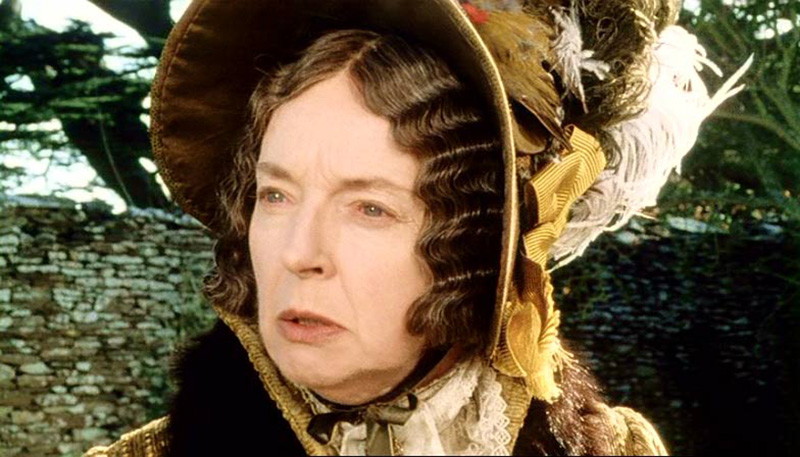
小说未详述重逢细节,留予读者想象空间。但部分读者认为,一贯务实的凯瑟琳夫人意识到不能永远与达西家族掌舵人为敌;也有人猜测,或许她逐渐对伊丽莎白的坚韧生出了 grudging(勉强的)敬意。
您认为呢?凯瑟琳夫人会变得柔和,抑或这只是面子与责任的权宜之计?
趣味延伸:各版《傲慢与偏见》中众多女演员诠释过凯瑟琳夫人·德·鲍尔。有的突出其滑稽傲慢,有的则侧重其威严冷酷。
经典演绎包括:
埃德娜·梅·奥利弗(1940电影版):戏剧化处理,略带柔化与幽默感
“不必道谢。别演这出闹剧了,班纳特小姐。得不到我要的承诺,我绝不离开”
芭芭拉· Leigh-Hunt(1995版):最贴合奥斯汀笔下形象,尽显绝对权威与居高临下
“岂有此理!班纳特小姐,我必须得到答案:我外甥是否向你求过婚?”
朱迪·丹奇女爵(2005电影版):极具威慑力的演绎,为角色注入王者气度
“以你这般年纪,发表意见倒很果断。请问芳龄几何?”
琳赛·邓肯(2008《迷失奥斯汀》):独特改编,严苛中偶现幽默
“她有种天生的难以言喻的气质——当然不及彬格莱小姐的水准,但教养本就是令嫒们的短板”
佩内洛普·基思女爵(2013《彭伯利谋杀案》):呈现更年长、更具反思性的形象
“我终究不留宿了。你会思考我的话,伊丽莎白,会认同我是对的”
“得了吧夫人,您该了解我的为人”
这些改编版中,哪个演绎最精准捕捉了凯瑟琳夫人的本质?哪个最忠于奥斯汀原著?哪个又赋予了角色新深度?
欢迎在评论区分享:您心中最令人难忘、最还原、或纯粹最喜爱的凯瑟琳夫人形象?哈哈…哪个版本符合您的所有期待?
凯瑟琳·德·鲍尔夫人始终是简·奥斯汀笔下最具威慑力的角色之一——她是一个逐渐消亡的社会秩序的遗老。请记住,简·奥斯汀最擅长社会批判,这一点我们已反复见证。
无论视其为反派、悲剧人物还是时代产物,凯瑟琳夫人在《傲慢与偏见》中的存在,都留下了不可磨灭的印记。
The Power of Privilege: Lady Catherine de Bourgh
Yes, yes, but this is all extremely vexing. I’m quite put out!
One of the most formidable characters in Pride and Prejudice, Lady Catherine, commands Rosings Park with an iron will, shaping not only the lives of those around her, but also attempting to dictate the fate of her nephew Mr. Darcy. Beneath her bluster lies a woman seemingly desperate to cling to the past—a relic of rigid aristocracy that is on the brink of change, and a tragic figure who, like her daughter Anne, never quite became what she was meant to be.
Let’s explore a little further.
Born Lady Catherine Fitzwilliam, she was the daughter of an earl, making her an aristocrat by birth. This instantly set her above most of society, but also placed her in a structured world where expectations dictated every aspect of her life. Like many noble daughters of the time, her path was clear from the beginning: marry well, bear children, and maintain the family’s influence.
Whether she was naturally overbearing or shaped into this figure of entitlement by circumstances is uncertain. But what is clear is that she embraced her rank with unwavering confidence.
“She will not think the worse of you for being simply dressed. She likes to have the distinction of rank preserved.”
“Thank you Mr. Collins, that is a great compliment.”
Her husband, Sir Lewis de Bourgh, remains an enigma mentioned only in relation to his death. Given Lady Catherine’s domineering personality, it is possible he was a quiet, unassuming figure, overshadowed by his wife’s forceful nature. On the other hand, he may have been the one person who could temper her arrogance, thus leaving her unchecked and unchallenged after his passing.
His death left Lady Catherine in complete control of Rosings Park and its fortune, making her one of the wealthiest women in the novel.
“64, and I have it on good authority that the glazing alone originally cost in excess of £600.”
Does she have a need for admiration and flattery? Well, her relationship with Mr. Collins might demonstrate this. She keeps him close, knowing he will hang on her every word. Her daughter Anne remains a frail and silent figure, seemingly existing only as a pawn in her mother’s ambitions. Whether Lady Catherine genuinely cared for Anne’s well-being or merely viewed her as an extension of her own failed dreams could remain a point of speculation.
Lady Catherine is best known for her overbearing nature, intrusive advice, and unquestioned belief in her superiority. She sees herself as an authority on all matters, whether it’s child-rearing, music, architecture, or marriage.
“Oh, your father may spare you if your mother can. Daughters are never of much consequence to her father.”
One of her most famous lines captures this perfectly:
“And if I had ever learned, I should be a true proficient.”
At first glance, this is just another example of Lady Catherine’s arrogance. However, this might also be a rare moment of vulnerability—an admission that she never became all that she believed she would be. Understanding Lady Catherine means recognizing her not just as a tyrant, but as a woman who, in another life, might have been extraordinary.
Now, although the novel never explicitly states how Mr. Collins came to be the rector of his parish, it is clear that Lady Catherine played an instrumental role in securing the position for him.
“For having received my ordination at Easter, I have been so fortunate as to be distinguished by the patronage of the Right Honourable Lady Catherine de Bourgh.”
In return, Collins dotes on her every word, never failing to praise her wisdom and her generosity:
“And thirdly, which perhaps I should have mentioned first, that it is the particular recommendation of my noble patroness.”
His devotion appears exaggerated, but I wonder if there could be a reason to believe that it may be a calculated performance. Collins knows that one day he will inherit Longbourn, at which point he may no longer need to depend on Lady Catherine’s patronage. His excessive praise may simply be a means to an end.
Ironically, Lady Catherine—so accustomed to controlling others—may herself be manipulated by the very man she believes she controls. Now, if I were in Collins’s shoes, I’d certainly give up the job as a rector to become a landed gentleman.
That being said, Lady Catherine relishes having someone who agrees with her without question, and Mr. Collins serves as a reflection of her own importance, reinforcing her dominance in his world. Whether she genuinely values his admiration or merely enjoys the ego boost it provides, their relationship is one of mutual convenience.
Lady Catherine’s interactions with different characters often reveal shifts in her demeanor. Around Mr. Collins, Sir William Lucas, and even Elizabeth Bennet, she exerts dominance—talking down to them, dismissing their opinions, and asserting her perceived superiority.
However, when in the presence of her nephew Mr. Darcy and his cousin Colonel Fitzwilliam, a very subtle change occurs. Unlike her behavior around social inferiors, Lady Catherine appears noticeably less forceful around Darcy and Fitzwilliam.
“Forgive me. Make my apologies to Lady Catherine Fitzwilliam.”
She still maintains an air of authority, but there is a distinct absence of the unchecked condescension she exhibits elsewhere. Instead, she engages in conversation with them in a way that suggests mutual respect. The shift in character dynamics implies that Lady Catherine acknowledges them as her equals, or at least as individuals who cannot be easily controlled.
That subtle eye roll of Darcy’s at the piano scene, I think, reflects this. Darcy is well aware of Lady Catherine’s nature—her busybody, nosy Parker kind of attitude. He’s fully aware of it and shows us in a subtle way, perhaps, his intolerance of her.
“What are you talking of? What are you telling Miss Bennet? I must have my share in the conversation.”
Now, it’s very interesting to see Lady Catherine’s shift in character status. One thing that I learned while I was doing some acting lessons was a thing called “character status.” If you’re doing day acting—if you have an agent, if you are an actor (and I do acting)—and someone says we need you to come in play a part just for one day, but you have no concept of what the whole story is and who your character is in regards to all the other characters, one of the first things you ask the director is: “What is my character status?”
And this is exemplified in the John Cleese and the Two Ronnies sketch. I’ll show you a little bit here:
“I look down on him because I am upper class. I look up to him because he is upper class. But I look down on him because he is lower class. I know my place.”
What this is saying is that you, as a character, have superiority over some and inferiority over others, and how you portray your character will reflect this.
So what I’m seeing with Lady Catherine de Bourgh is that while she is superior to Elizabeth, Collins, and Sir William Lucas—her air of character is portrayed as superior—but then when you contrast it with Darcy and Fitzwilliam, it’s on par. Well, it’s definitely not inferior, but it’s definitely on par.
So, character status is even shown when Jane Austen writes her characters. So obviously, Elizabeth has a stronger character status over maybe Charlotte, but certainly over Mr. Collins, and she has a way of showing that authority.
So yeah, Lady Catherine’s character we do see change when she’s around Darcy and Fitzwilliam.
One of the most intense moments in Pride and Prejudice is Lady Catherine’s unexpected arrival at Longbourn.
“Where is she? Is this the Drawing Room? Lady Catherine de Bourgh.”
She demands to speak to Elizabeth Bennet. The confrontation in the garden in the 1995 adaptation is a verbal duel, with both women defending their positions fiercely.
Lady Catherine arrives determined to ensure that Elizabeth does not marry Mr. Darcy. She insists that such a match is impossible—that Darcy was always intended for her daughter Anne, and that Elizabeth’s inferior birth makes her unworthy.
Here, Lady Catherine reveals her devotion to class distinction. She initially argues that Elizabeth is beneath Darcy because of her social standing. However, Elizabeth counters that she is a gentleman’s daughter, just as Darcy is a gentleman, making them equals by rank.
“He is a gentleman; I am a gentleman’s daughter. So far we are equal.”
Forced to acknowledge this, Lady Catherine pivots to another argument: Elizabeth’s mother and her extended family, who lack refinement and have connections to trade.
“But who is your mother? Who are your uncles and aunts? Do not imagine me ignorant of their condition.”
Further solidifying her belief that Elizabeth is unsuitable—and that’s not even mentioning (although I am now) the infamous elopements. “Woe to the shades of Pemberley,” right? “Are the shades of Pemberley to be thus polluted?”
This exchange perfectly captures the rigid social hierarchy of the time, where wealth and breeding were seen as defining attributes. Lady Catherine’s passionate defense of these principles suggests not just a desire to uphold tradition, but also a desperate attempt to maintain a world that’s clearly slipping away.
“I take no leave of you, Miss Bennet. I send no compliments to your mother. You deserve no such attention.”
But in visiting Elizabeth and challenging her, she unknowingly seals Elizabeth and Darcy’s fate.
“Lady Catherine told me of her meeting with you. You may say that her disclosure had quite the opposite effect to the one she intended.”
By challenging Elizabeth, she forces Darcy to reexamine his own desires. Without Lady Catherine’s interference, would Darcy have ever found the courage to defy social convention and propose again? It could be possible that, along with the Gardiners, Lady Catherine herself played a part in helping to unite Darcy and Elizabeth.
“It taught me to hope as I had scarcely ever allowed myself to hope before. And if that had you absolutely decided against me, you would have acknowledged it openly.”
The 1940 adaptation has Lady Catherine as a co-conspirator with Darcy, if you like. She’s actually instrumental in making sure Elizabeth and Darcy get together—pretty stretched from the original novel. But it’s almost as if Darcy needs his aunt’s assistance:
“She’s right for you, Darcy. You were a spoiled child, but we don’t want to go on spoiling you. What you need is a woman who will stand up to you.”
But other adaptations of Pride and Prejudice, with Elizabeth and Darcy’s marriage, leave Lady Catherine fuming in the background, presumably forever estranged from the Darcys.
However, the novel actually suggests otherwise. Austen notes that sometime after Elizabeth and Darcy are married, Lady Catherine visits them at Pemberley.
But why? Was it simply curiosity—an inability to resist seeing how Elizabeth had settled into her new role? Did she expect to find Elizabeth floundering in a position she deemed unsuitable for her? Or perhaps, more intriguingly, did Lady Catherine ultimately come to accept Elizabeth, albeit begrudgingly?
The novel doesn’t provide details on their reunion, leaving room for speculation. But some readers believe Lady Catherine, ever pragmatic, recognized that she could not remain at odds with the head of the Darcy family forever. Others wonder if, over time, she may have developed a reluctant respect for Elizabeth’s strength.
What do you think? Could Lady Catherine have softened, or was this simply a matter of pride and obligation?
Here’s a fun section for you: Lady Catherine de Bourgh has been portrayed by many actresses across various adaptations of Pride and Prejudice. Some interpretations emphasize her comic arrogance, while others lean into her imposing and unyielding nature.
Among the most well-known portrayals are the following:
Edna May Oliver in the 1940 film – a more theatrical take on Lady Catherine, with a slightly softening, humorous approach.
“I will not be thanked. Let us have no more of this mummery, Miss Bennet. I shall not leave this house until you have given me the assurance for which I ask.”
Barbara Leigh-Hunt in the 1995 adaptation – perhaps the most faithful to Austen’s description, with an air of absolute authority and condescension.
“This is not to be borne! Miss Bennet, I insist on being satisfied. Has my nephew made you an offer of marriage?”
Judi Dench in the 2005 film (or should I say Dame Judi Dench) – she provided a powerful and intimidating portrayal, bringing a regal gravitas to the role.
“Upon my word, you give your opinion very decidedly for so young a person. Pray, what is your age?”
Lindsay Duncan in 2008’s Lost in Austen – a unique twist on Lady Catherine, blending severity with surprising moments of humor.
“She has a natural je ne sais quoi—not of the same caliber as Miss Bingley, of course, but that is breeding, a matter in which your daughters are disadvantaged.”
Penelope Keith in 2013’s Death Comes to Pemberley (another dame—so many dames!) – her portrayal suggests an older, more reflective version of the character.
“I will not be staying after all. You will think about what I said, Elizabeth. You’ll decide I’m right.”
“Come now, Lady Catherine, surely you know me better than that.”
In these scenes from each adaptation, which performance best captures the essence of Lady Catherine? Does one stay truer to Austen’s depiction, or do certain performances bring new depth to the character?
Do let me know in the comments: which Lady Catherine you believe was the most memorable, or the most accurate representation, or indeed just which one was your favorite? Haha… which one ticked all the boxes for you?
Lady Catherine de Bourgh then remains one of Jane Austen’s most formidable characters—a relic of a social order that is slowly eroding. And remember, Jane Austen was an expert in social commentary, and we’ve seen this time and time again.
Now, whether Catherine de Bourgh was seen as an anti-hero, a tragic figure, or a product of her time, her presence in Pride and Prejudice leaves an undeniable impact.