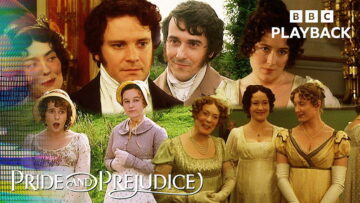
傲慢与偏见中那个不起眼的四小姐:凯蒂·班纳特

“妈妈。– 凯蒂,别总是咳嗽了。看在老天的份上,体谅一下我的神经吧!我又不是为了取乐才咳嗽的。” 在《傲慢与偏见》的宏大叙事中,许多角色都留下了深刻的印象:比如聪慧独立的女主角伊丽莎白;比如阴郁高傲的绅士达西;甚至是丑闻缠身的小妹莉迪亚,也让人无法忘怀。那么凯蒂·班纳特呢?她在这部广受喜爱的小说中扮演了什么角色?她又是如何成长,走出更出名妹妹的阴影?
“我们要不要告诉她,凯蒂?”
“好啊,然后看她会不会脸红。”(哈哈哈)
尽管凯蒂在核心情节中不算重要,她的角色却能帮助我们理解班纳特一家的家庭动态、环境对个人成长的影响,以及莉迪亚丑闻私奔对留下的人的冲击。虽然简·奥斯汀并没有花太多笔墨去塑造凯蒂的成长弧线,但小说中的一些微妙线索暗示,在莉迪亚离开后,她经历了一种转变。在这篇分析中,我将探讨凯蒂的人际关系、她在故事中的作用,以及在《傲慢与偏见》之后她可能的结局。
凯蒂的性格与最初角色
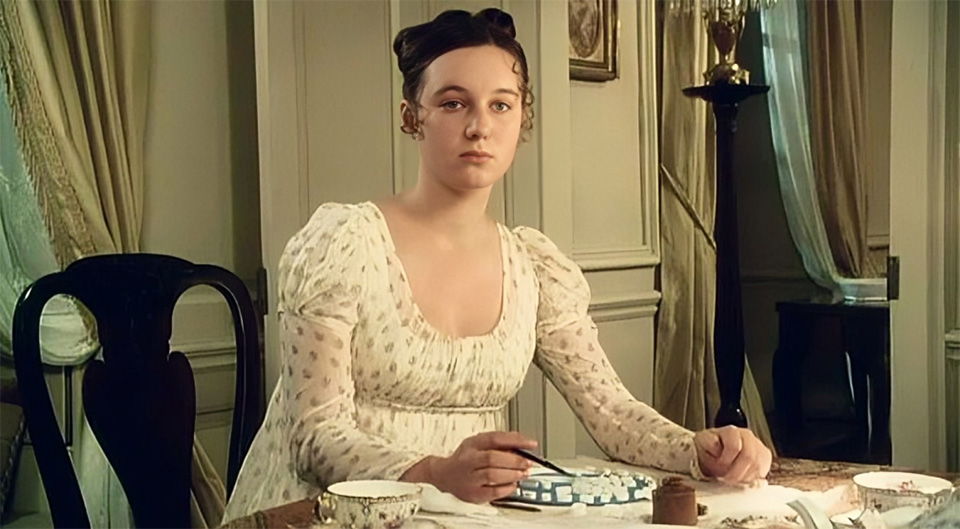
凯蒂·班纳特,原名凯瑟琳,是班纳特五姐妹中的第四个。她经常被描绘成轻浮、易受影响,并渴望和小妹莉迪亚一样参与各种热闹。“福斯特太太应该邀请我和莉迪亚一起。我也许不是她特别的朋友,但我和莉迪亚一样有资格被邀请。哈哈,而且更应该邀请我,因为我大她两岁!”
不同于拥有机智和道德感的姐姐伊丽莎白和简,凯蒂缺乏独立性和方向,经常跟随莉迪亚的脚步。一开始,凯蒂的行为就表现出她的不成熟和对社交的渴望。她迷恋军官、舞会,渴望关注,并常常抱怨一些小事。一个显著的例子是她过度咳嗽的习惯,这常被家人看作是博取注意,而不是出于真正的病症。
“别总是咳嗽了,凯蒂。看在老天的份上,别把我的神经撕碎。”
“别总是咳嗽了,凯蒂。看在老天的份上,体谅一下我的神经。”
“我又不是为了取乐才咳嗽的。”
这些片段勾勒出一个既被忽视、却又渴望被认可的年轻女性。
“凯蒂。”
“在呢,爸爸。”
“你现在可以随便咳嗽了。”
“好吧,凯蒂,我想你现在可以随便咳嗽了。”
虽然凯蒂并没有在《傲慢与偏见》中对情节产生重大影响,但她的存在强化了班纳特家中年幼姐妹们的混乱与无纪律。她在家庭中的角色突显了班纳特夫妇未能好好引导小女儿们,这最终导致了莉迪亚的耻辱。
在不同版本的《傲慢与偏见》影视改编中,凯蒂的形象也有所不同,有些版本将她描绘成莉迪亚的翻版,而另一些则赋予她略为独立的个性。比较这些改编,可以帮助我们了解凯蒂的不同解读,以及她潜在成长被多大程度承认。
在莉迪亚的阴影下的凯蒂·班纳特
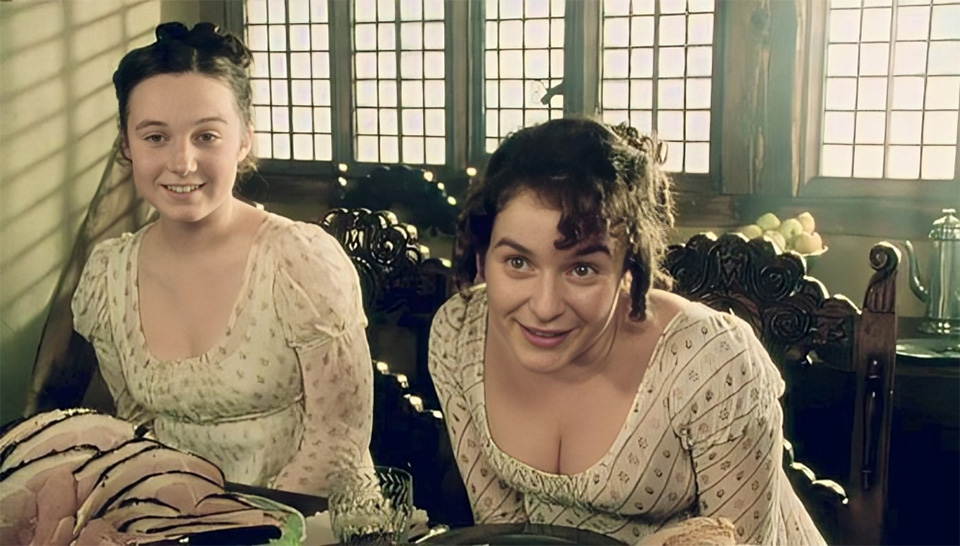
尽管是两人中年长的那个,凯蒂却完全受莉迪亚·班纳特的影响。莉迪亚大胆、鲁莽的性格主导了她们的关系,使凯蒂只能处于被动追随者的角色。
“再见,莉兹。快看,凯蒂,那不是卡特上尉吗?来吧,快点!”
这两姐妹都痴迷于军官和社交活动。但莉迪亚无所畏惧、毫无羞耻,而凯蒂始终生活在她的阴影下,既不敢冒险,也没有独立性。
莉迪亚之所以大胆,是因为她会在公众场合公然与军官调情,公开无视社会期望,最终不顾丑闻直接和韦翰私奔。而凯蒂则并不大胆,因为她并未主动发起这些行为。她只是跟随莉迪亚的带领。她同样沉迷于轻浮的消遣,但缺乏像莉迪亚那样独立行动的勇气。
同样,莉迪亚是独立的,因为她自己做出(尽管鲁莽)的决定,无视家人的权威,积极追求自己想要的东西,毫不犹豫。而凯蒂并不独立,因为她依赖莉迪亚来决定她的行为。她自己并不会叛逆,也不会掌控局面;她只是单纯跟随莉迪亚的步伐。
莉迪亚的魅力和冲动的天性使她成为领头者,而凯蒂因缺乏强烈的个性,只是被席卷其中。两人之间的这种权力不平衡引出了一个有趣的问题:如果莉迪亚不存在,凯蒂是否仍然会是那个肤浅轻浮的女孩,还是她仅仅是环境的产物,本可以成长为完全不同的样子?
“是不是很好看?你觉得我穿上好不好看?”
“没有我好看。来吧,不行,我不要。简!快来看看这个!”
在不同的《傲慢与偏见》改编作品中,莉迪亚和凯蒂的关系动态得到了最好的视觉呈现,莉迪亚经常被表现为拉着凯蒂——无论是比喻意义上还是字面意义上——一同投入社交的冒险。
转折点:莉迪亚私奔之后的生活
有趣的是:在莉迪亚私奔之前,没有任何迹象表明凯蒂拥有独立意识。她在所有事情上都追随莉迪亚,从共同的军官热情到对礼仪的漠视。然而,莉迪亚丑闻般的私奔不仅对家庭,对凯蒂的成长也标志着一个转折点。当莉迪亚与韦翰私奔时,后果极其严重。全家陷入耻辱,班纳特先生的教育失败暴露无遗,而班纳特太太则歇斯底里地崩溃。
但当伊丽莎白和简忙于挽救家族声誉时,凯蒂却经历了一种更安静的转变。班纳特先生如今痛苦地意识到自己的疏忽,于是对剩下的未婚女儿施加了更严格的规矩。凯蒂不再被允许随意外出,她被迫退出了她曾热爱的活跃社交圈。
“我才不会私奔呢,爸爸,如果我去了布赖顿,我会比莉迪亚更规矩的。”
“你去布赖顿?我连让你靠近伊斯特本都不会放心。”
有趣的是,在莉迪亚离开后,凯蒂在小说中的存在感减弱,这表明她其实并不像莉迪亚那样天生放荡;她只是在模仿。没有莉迪亚的影响后,凯蒂开始发生变化。书中提到她花更多时间和简、伊丽莎白在一起,也暗示她逐渐变得更为文雅。虽然她的变化很微妙,但这暗示着她一直具备成长的潜质,只是需要摆脱莉迪亚的影响,才能开始塑造自己的个性。
“不,凯蒂,我终于学会了谨慎,你会体会到后果。舞会将被完全禁止!如果你在未来十年里都是个好姑娘,我就带你去参加一次阅兵。”
班纳特先生的轻蔑与凯蒂的潜在反应
在《傲慢与偏见》中,班纳特先生拒绝让凯蒂去布赖顿,甚至不让她去靠近布赖顿的地方,这一刻可以看作是凯蒂人生中的一个关键时刻。他的言辞带有轻蔑,再次强化了这样的观念:在他眼里,她依旧只是一个轻浮、不负责任的女儿,把她和莉迪亚归为一类,尽管真正惹出麻烦的人是莉迪亚。
然而,到小说的这个阶段,已经有一些微妙的迹象表明凯蒂开始发生变化。随着莉迪亚的离开,她不再受这个妹妹的影响,而是花更多的时间和简、伊丽莎白在一起,而她们二人无疑是更好的榜样。没有了莉迪亚不断地推着她去胡闹和虚荣,凯蒂得到了机会去培养自己的思想和身份。
因此,当班纳特先生讽刺地评论她、实质上禁止她去布赖顿、并暗示她不值得信任时,凯蒂很可能会因此感到刺痛。毕竟,如果她真的已经开始成熟,那么她可能会意识到,被人凭过去的行为来评判,而不是凭她正在成为的那个人,是一种不公。
这句话也可能带有羞辱的成分,因为它暗示她依然不值得被信任,也不配拥有独立。这一刻对凯蒂来说可能是一种觉醒,甚至可能成为她进一步成长的催化剂,因为它迫使她去承认别人是如何看待她的,并且她必须用自己的行动来证明,她并不是莉迪亚的影子。
通过改编作品解读凯蒂的成长(以 1995 版为例)
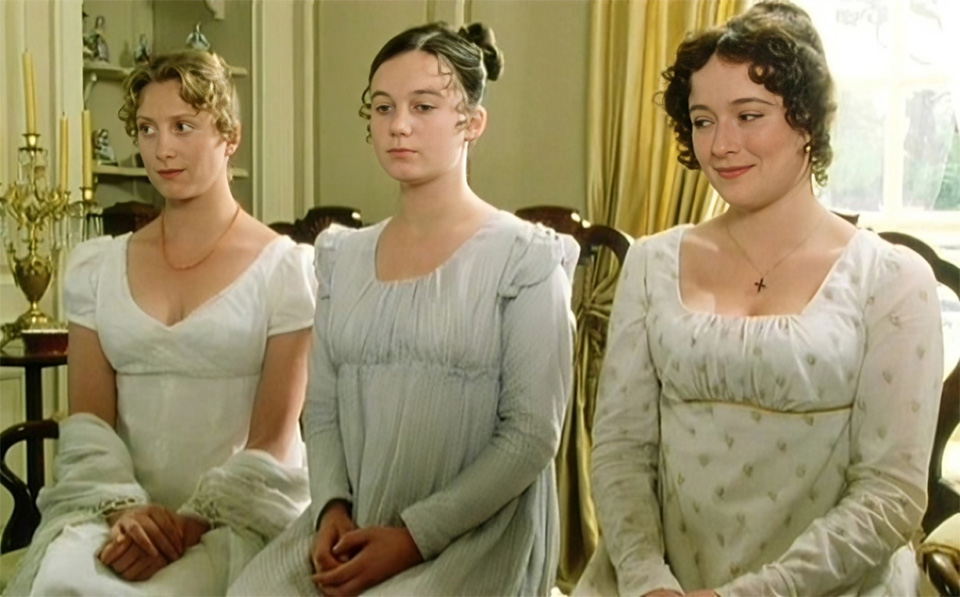
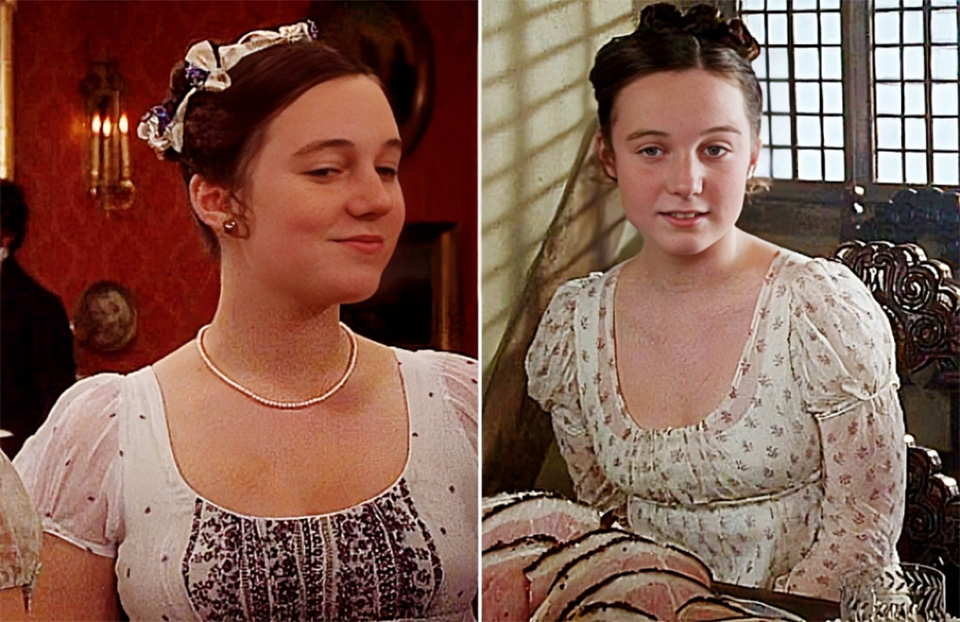
有一件事我常常注意到,那就是波莉·梅伯利(Polly Maberly)在饰演凯蒂时的表现,尤其是在莉迪亚和韦翰结婚后回到浪博恩的场景中。梅伯利在 1995 年改编版中通过面部表情和非语言的暗示,强有力地传达了这个角色的内心情绪。
在那个特定场景里,当班纳特一家等待作为新婚夫妇的莉迪亚和韦翰到来时,凯蒂的表情似乎确实表现出她对莉迪亚态度的变化。考虑到凯蒂早先对莉迪亚的崇拜,人们或许会预期她对姐姐的归来感到兴奋,特别是莉迪亚如今已婚——在摄政时期的社会中,这被认为是年轻女性值得羡慕的身份。
然而,如果梅伯利的表演传达出不快或不适,这就可能说明凯蒂已经开始与莉迪亚的鲁莽行为保持距离。
凯蒂可能的感受
幻灭:在私奔之前,凯蒂把莉迪亚看作是有趣、大胆的领头人。但如今,在丑闻的余波之下,凯蒂或许已经开始意识到莉迪亚行为的全部后果。
“不要,简,现在我取代你的位置了,你必须往下坐,因为我是个已婚女人。”
尽管这场婚姻挽救了莉迪亚免于彻底的耻辱,但对全家人来说很清楚,韦翰是被迫成婚的,而这桩婚姻并没有真正的荣誉。凯蒂或许第一次意识到,莉迪亚的选择并不总是能带来钦佩或成功。
尴尬与羞愧:凯蒂在莉迪亚不在的这段时间里,有了反思的机会,现在或许会为自己和莉迪亚在丑闻前的行为感到羞耻。
“莉迪亚和我跳了每一支舞,却谁也没嫁出去。”
看到莉迪亚回来时对自己给家人带来的压力毫无察觉,这可能让凯蒂深刻体会到姐姐的鲁莽本性与家人们克制、几乎哀伤地接待新婚夫妇的态度形成鲜明对比。这对凯蒂来说可能是一个痛苦的觉醒,因为它迫使她以一种新的、不那么值得钦佩的眼光看待莉迪亚。
怨恨:凯蒂也可能会产生怨恨感,不一定是针对莉迪亚本人,而是针对莉迪亚的行为导致她自己被施加了更严格的规矩。
“你?去布赖顿?我连让你靠近伊斯特本都不会放心,就算给我 50 英镑也不行。”
正如我之前提到的,莉迪亚私奔后,班纳特先生对凯蒂的社交生活施加了更多限制,这可能让她感到刺痛,而她可能会把自己现在受到的不同待遇归咎于莉迪亚。
嫉妒与道德觉醒:如果凯蒂在这个阶段还没有完全成熟,她心里可能仍残留一些嫉妒。毕竟莉迪亚抢先一步,先找到了丈夫,而凯蒂或许仍然渴望婚姻与军官们的关注。然而,如果凯蒂的表情确实传达出真切的不快,这就可能意味着她并没有嫉妒,而是开始形成一种更为成熟的视角,甚至可能意识到与韦翰的婚姻并不是值得羡慕的奖赏。
如果波莉·梅伯利在这个场景里有意将凯蒂演绎为不快,那是一个富有洞见的选择,与凯蒂细微的角色成长相呼应。她已不再是那个曾经在一切事情上追随莉迪亚的天真少女,而是逐渐成长为一个能看清莉迪亚冲动本质的人:轻率且最终有害。
凯蒂的未来与遗产
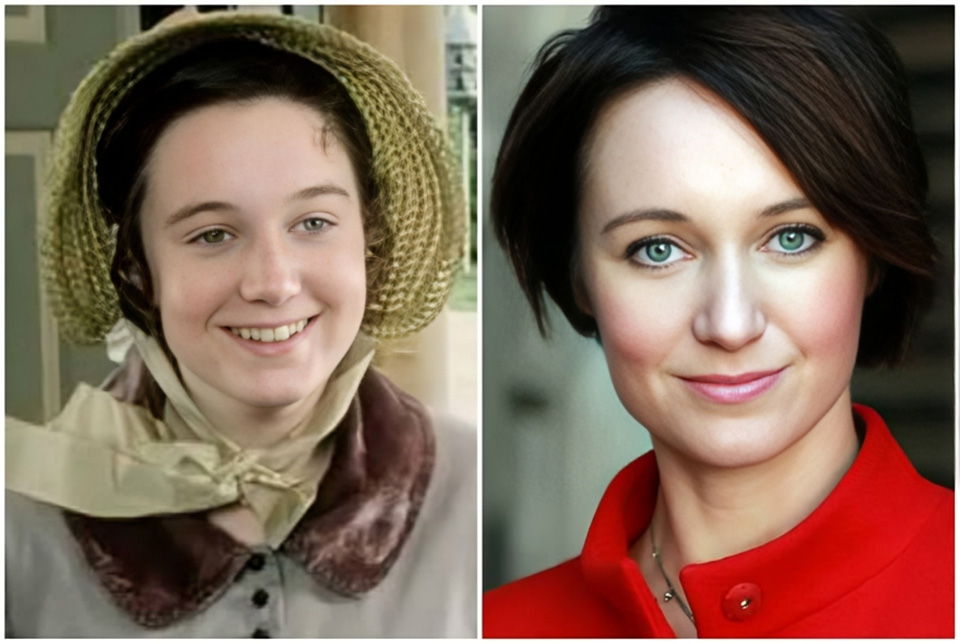
随着莉迪亚被移出她的直接影响范围,凯蒂的社交圈发生了巨大变化。她如今花更多的时间与伊丽莎白和简相处,而她们象征着稳定、智慧和道德基础。在这种环境转变下,可以合理推测凯蒂逐渐成熟,变得更为稳重,也更少轻浮。
书中的提及暗示凯蒂从新的影响中获益,一些学者推测,如果条件合适,她可能成长为一位优雅而明智的年轻女性。在摄政时期,年轻女性的社会期望深受其环境的影响。随着伊丽莎白与达西结婚、简与彬格莱成婚,凯蒂很可能接触到更体面的社会圈子,从而进一步促进了她的成长。
尽管简·奥斯汀并未给凯蒂安排明确的结局,她的哥哥亨利·奥斯汀曾说过,凯蒂最终嫁得不错。虽然小说中没有确认,但这提供了一个颇具吸引力的可能性。
我在 Pemberley.com 网站上发现了这样一段话:根据简·奥斯汀的外甥詹姆斯·爱德华·奥斯汀-利的回忆录(1870 年代出版),简·奥斯汀曾告诉家人,凯蒂(括号里注明:凯瑟琳·班纳特)最终满意地嫁给了彭伯利附近的一位牧师——这与夏洛特嫁给柯林斯先生颇为相似。
同人小说和其他解读提出了各种凯蒂的未来可能性。有的认为她嫁给了一名军官,或许是一个被“改造”的韦翰版本;也有人认为她在伊丽莎白的新社交圈里找到了体面的婚姻。不论她确切的命运如何,人们普遍认为她没有步莉迪亚的后尘,而是选择了一条更为理智和体面的道路。
结论:成长的普遍真理
在《傲慢与偏见》中,我们初见的凯蒂·班纳特并不是一个独立的思考者。她容易受身边人影响,尤其是莉迪亚,并且似乎缺乏独特的身份。但那真的是她的本质吗?还是只是她在那个特定阶段的样子?
人不会一成不变。我们会成长,有时是因为自己做出的选择,有时是因为生活迫使我们改变。莉迪亚私奔后凯蒂的转变虽然细微,但却意义重大。失去了莉迪亚的影响,被迫重新审视自己的人生,并且置身于伊丽莎白和简的陪伴中,凯蒂开始逐渐成为一个不同的人。
“莉兹,我能顺着这条小路跑去看看玛丽亚·卢卡斯吗?”
“当然可以。”
一个更坚强、更优雅,也许更具自我意识的人。这不正是我们每个人的写照吗?17 岁的我们,几乎从不会是 25 岁、30 岁或更往后的人。我们的经历塑造了我们。我们所犯的错误、进入和离开我们生活的人,以及我们所面对的环境,都推动了我们的个人成长。凯蒂,在许多方面,正代表了这种普遍的真理。
等到亨利·奥斯汀或詹姆斯·爱德华·奥斯汀-利提到她的未来时,她已经不再只是“凯蒂·班纳特,莉迪亚的跟班”。她已是“凯瑟琳·班纳特”,一位据说成熟、婚姻美满、并且可能安顿于体面而幸福生活的女性——或许,最终甚至连莉迪亚都可能会嫉妒她。
所以,在我们过于严厉地评判凯蒂之前,不妨想一想:我们当中有谁愿意仅凭少年时期的样子来被定义呢?成长是不可避免的,如果我们愿意给自己足够的空间去进化,我们就能像凯蒂一样,超越过去的局限,走向自己创造的未来。
所以呢,我并不是要说“让我们从凯蒂的错误中吸取教训”,但可以肯定的是,我们看到,当莉迪亚的影响消失之后,凯蒂成长了,而且,你知道,她为自己创造了一段有意义的人生。
Introduction: The Overlooked Sister Kitty
Mama. Don’t keep coughing so, Kitty. For heaven’s sake, have a little compassion on my nerves! I don’t cough for my own amusement.
In the grand scheme of Pride and Prejudice, many characters leave a lasting impression: think Elizabeth, the intelligent and independent heroine; think Darcy, the brooding noble gentleman; even Lydia, the scandalous younger sister, is impossible to forget. But what of Kitty Bennet? What role does she play in the beloved novel, and how does she grow beyond the shadow of her more infamous sister?
“Shall we tell her, Kitty?” “Yes, and watch to see if she blushes.” Hahaha.
Despite her lack of importance in the central plot, Kitty Bennet’s role can help us understand the family dynamics of the Bennets, the influence of environment on personal growth, and the impact of Lydia’s scandalous elopement on those left behind. While Jane Austen doesn’t devote much time to developing Kitty’s character arc, subtle clues in the novel suggest that she undergoes a transformation after Lydia’s departure.
In this analysis, I’ll explore Kitty’s relationships, her role in the story, and what may have become of her beyond Pride and Prejudice.
Kitty’s Character and Initial Role
Kitty Bennet, formerly known as Catherine, is the fourth of the five Bennet sisters. She’s frequently depicted as frivolous, impressionable, and desperate to be included in the same excitements as her younger sister Lydia.
“Mrs. Forster should have asked me as well as Lydia. I may not be her particular friend, but I have just as much right to be asked as she has. Hahaha, and more too, for I am two years older!”
Unlike her older sisters Elizabeth and Jane, who possess wit and moral sensibilities, Kitty lacks independence and direction, often following wherever Lydia leads. From the outset, Kitty’s behaviour is defined by her immaturity and her desire for social engagement. She is preoccupied with officers, balls, and eager for attention, and frequently engages in petty complaints.
One notable example is her tendency to cough excessively, a habit often dismissed by her family as attention-seeking rather than a genuine ailment.
“Don’t keep coughing so, Kitty. For heaven’s sake, tear my nerves to pieces.” “Don’t keep coughing so, Kitty. For heaven’s sake, have a little compassion on my nerves.” “I don’t cough for my own amusement.”
These moments paint a picture of a young woman who is both overlooked and yet desperate for recognition.
“Kitty, yes papa.” “You may now cough as much as you choose.” “Well, Kitty, I think you may cough as much as you choose now.”
While Kitty doesn’t significantly influence the plot of Pride and Prejudice, her presence serves to reinforce the chaotic, undisciplined nature of the younger Bennet sisters. Her role in the family dynamic highlights Mr. and Mrs. Bennet’s failure to properly guide their younger daughters, an issue that ultimately leads to Lydia’s disgrace.
Visually, Kitty has been portrayed differently across various Pride and Prejudice adaptations, with some versions emphasizing her as a secondary Lydia and others giving her a slightly more distinct personality. A comparative look at the adaptations can shed light on how Kitty’s character is interpreted and the extent to which her potential growth is acknowledged.
Under Lydia’s Shadow
Despite being the elder of the two, Kitty is entirely under the influence of Lydia Bennet. Lydia’s bold, reckless nature dominates their relationship, leaving Kitty in the role of the passive follower.
“Bye, Lizzie. Look, Kitty, isn’t that Captain Carter? Come on, make haste!”
The two sisters share an obsession with officers and social outings. But whereas Lydia is fearless and shameless, Kitty remains in her shadow, neither as daring nor as independent.
Lydia is daring because she actively flirts with the officers in public, openly disregards social expectations, and ultimately elopes with Wickham without a second thought for the scandal it will cause. Kitty, on the other hand, is not as daring because she doesn’t instigate those behaviors herself. She simply follows Lydia’s lead. She enjoys the same frivolous pursuits, but she lacks the audacity to act as independently as Lydia does.
Similarly, Lydia is independent in the sense that she makes her own (albeit reckless) decisions, disregards her family’s authority, and actively pursues what she wants without hesitation. Kitty is not as independent because she relies on Lydia to dictate her actions. She does not rebel on her own or take charge of situations; she merely follows wherever Lydia leads.
Lydia’s charisma and impetuous nature make her the leader, while Kitty, lacking the strong personality, is simply swept along. The power imbalance between them raises an interesting question: If Lydia had not been present, would Kitty still be the same shallow, frivolous girl, or was she merely a product of her environment, with the potential to grow into something different?
“Isn’t it nice? Do you think I’d look well in them?” “Not as well as me. Come on, no I shan’t. Jane! Come here, look at this!”
Visually, Lydia and Kitty’s dynamic is best captured in various Pride and Prejudice adaptations, where Lydia is often seen pulling Kitty along, both figuratively and literally, through social escapades.
A Turning Point: Life After Lydia’s Elopement
It’s interesting to think: before Lydia’s elopement, there were no clear signs that Kitty possesses any sense of independence. She follows Lydia’s lead in everything, from their shared enthusiasm for officers to their disregard of propriety.
However, Lydia’s scandalous elopement marks a turning point, not just for the family but for Kitty’s development as well. When Lydia runs away with Wickham, the consequences are severe. The family is thrown into disgrace, Mr. Bennet’s parenting failures are laid bare, and Mrs. Bennet collapses in hysterics.
But while Elizabeth and Jane focus on saving the family’s reputation, Kitty undergoes a quieter transformation. Mr. Bennet, now painfully aware of his negligence, imposes stricter rules on his remaining unmarried daughters. Kitty is no longer permitted to go out as freely, and she is forced to withdraw from the lively social world she once enjoyed.
“I’m not going to run away, papa, if I should go to Brighton, I would behave better than Lydia.” “You go to Brighton? I wouldn’t trust you as near it as Eastbourne.”
Interestingly, Kitty’s diminished presence in the novel after Lydia’s departure suggests that she was never naturally as wild as Lydia; rather, she was simply following along. Without Lydia’s influence, Kitty begins to change. Mentions in the book indicate that she spends more time with Jane and Elizabeth, and there are hints that she becomes more refined. While her transformation is subtle, it suggests that she had the potential for growth all along, but it took the removal of Lydia’s influence for her to start developing her own character.
“No, Kitty, I have at last learned to be cautious, and you will feel the effects of it. Balls will be absolutely prohibited! If you’re a good girl for the next 10 years, I’ll take you to a review at the end of them.”
Mr. Bennet’s Dismissal and Kitty’s Potential Reaction
The moment in Pride and Prejudice where Mr. Bennet refuses to let Kitty travel to Brighton, or anywhere near it, can be seen as a pivotal one for Kitty. His remark is dismissive and reinforces the idea that he still sees her as just another frivolous, irresponsible daughter, lumping her together with Lydia despite Lydia being the true instigator of trouble.
By this point in the novel, however, there are subtle indications that Kitty has already begun to change. With Lydia gone, she’s no longer under her younger sister’s influence, and she is spending more time with Jane and Elizabeth, both of whom serve as much better role models. Without Lydia constantly pushing her into mischief and vanity, Kitty has the opportunity to develop her own thoughts and identity.
So when Mr. Bennet makes his sarcastic remark, essentially banning her from Brighton and implying that she cannot be trusted, Kitty may very well feel stung by it. After all, if she had started to mature, she may sense the injustice in being judged by her past behaviour rather than who she is becoming.
The comment may also carry an element of humiliation, as it suggests that she is still not worthy of trust or independence. This could be a moment of realization for Kitty, perhaps even a catalyst for further growth, because it forces her to acknowledge how others perceive her and that she must prove through her actions that she’s not just a shadow of Lydia.
Interpreting Kitty’s Growth Through Adaptation (1995 Example)
Now, one thing I’ve often observed is the way Polly Maberly portrays Kitty, especially in the scene where Lydia and Wickham arrive at Longbourn after they’re married. Polly Maberly’s facial expressions and nonverbal cues in the ’95 adaptation are a powerful way to understand the character’s internal emotions.
In that particular scene, when the Bennet family is waiting for Lydia and Wickham to arrive as newlyweds, Kitty’s expression does seem to convey a shift in her feelings towards Lydia. Given Kitty’s earlier idolization of Lydia, one might expect her to be excited by her sister’s return, especially since Lydia is now married—something that in Regency society would have been seen as an enviable status for a young woman.
However, if Maberly’s performance suggests displeasure or discomfort, this could indicate that Kitty is already beginning to distance herself from Lydia’s reckless behavior.
What Could Kitty Be Feeling?
Disillusionment, perhaps: Before the elopement, Kitty saw Lydia as the fun, daring leader. But now, in the wake of the scandal, Kitty may have started to realize the full consequences of Lydia’s actions.
“No, Jane, I take your place now, you must go lower, because I am a married woman.”
Even though the marriage saved Lydia from total disgrace, it is clear to the rest of the family that Wickham was forced into the marriage and there is no real honor in it. Kitty may have seen for the first time that Lydia’s choices do not always lead to admiration or success.
Embarrassment and Shame: Kitty has had time to reflect during Lydia’s absence and may now feel ashamed of how they both behaved before the scandal.
“And Lydia and I danced every dance and married none.”
Seeing Lydia return completely oblivious to the stress she caused might make Kitty acutely aware of how her sister’s reckless nature contrasts with the rest of the family’s subdued, almost mournful reception of the newlyweds. This could be a painful realization for Kitty, as it forces her to see Lydia in a new, less admirable light.
Resentment: It’s also possible that Kitty feels resentment, not necessarily towards Lydia personally, but towards the way Lydia’s behavior has led to stricter rules being imposed on her.
“You, go to Brighton. I wouldn’t trust you as near it as Eastbourne, not for £50.”
As I said earlier, Mr. Bennet’s restrictions on Kitty’s social life following Lydia’s elopement may have stung, and she may see Lydia as the reason she is now being treated differently.
Jealousy vs. Moral Awakening: If Kitty is not yet fully matured at this stage, there could still be lingering traces of jealousy. Lydia has gone ahead by securing a husband first, and Kitty may still crave the excitement of marriage and officers’ attentions. However, if Kitty’s expression suggests genuine displeasure, it could mean that she’s not jealous at all but rather starting to develop a more mature perspective, perhaps even recognizing that marriage to Wickham is not a prize.
If Polly Maberly intentionally played Kitty as displeased in this moment, it is an insightful choice that aligns with Kitty’s subtle character growth. Rather than being the same naive girl who once followed Lydia in everything, Kitty may already be evolving into someone who sees Lydia’s impulsiveness for what it truly is: irresponsible and ultimately damaging.
Kitty’s Future and Legacy
With Lydia removed from her immediate sphere of influence, Kitty’s social world changes dramatically. She now spends more time with Elizabeth and Jane, both of whom represent stability, intelligence, and moral grounding. Given this shift in environment, it is reasonable to assume that Kitty gradually matures, becoming more composed and less frivolous.
Mentions in the book suggest that Kitty benefits from her new influences, and some scholars speculate that, given the right circumstances, she may have grown into a refined and sensible young woman. In the Regency era, social expectations for young women were heavily influenced by their surroundings. With Elizabeth now married to Darcy and Jane to Bingley, Kitty likely gained exposure to more respectable society, further encouraging her growth.
Although Jane Austen never provides a definitive conclusion for Kitty, her brother Henry Austen once stated that Kitty eventually married well. Though this is not confirmed in the novel, it provides an intriguing possibility.
I found this passage on the website Pemberley.com: According to the memoir of Jane Austen published in the 1870s by her nephew James Edward Austen-Leigh, Jane Austen told her family that Kitty (in brackets: Catherine Bennet) was satisfactorily married to a clergyman near Pemberley—not unlike Charlotte and Mr. Collins.
Fan-fiction and alternative interpretations propose various futures for Kitty. Some suggest she marries a military officer, perhaps a reformed version of Wickham, while others believe she found a respectable match within Elizabeth’s new social circle. Regardless of her exact fate, it is generally accepted that she did not follow in Lydia’s footsteps but instead took a more sensible and respectable path.
Conclusion: The Universal Truth of Growth
Kitty Bennet, as we meet her in Pride and Prejudice, is not an independent thinker. She’s easily swayed by those around her, particularly Lydia, and seems to lack a distinct identity of her own. But is that who she truly is, or who she was at that moment in time?
People are not static. We evolve, sometimes because of the choices we make, sometimes because life forces us to change. Kitty’s transformation after Lydia’s elopement is subtle but significant. Stripped of Lydia’s influence, forced to reassess her life, and placed in the company of Elizabeth and Jane, Kitty begins developing into someone different.
“Lizzie, do you mind if I just run down the lane here to call on Maria Lucas?” “No, not at all.”
Someone stronger, more refined, and perhaps more self-aware. And isn’t that true for all of us? The person we are at 17 is rarely the person we become at 25 or 30 or beyond. Our experiences shape us. The mistakes we make, the people who come and go from our lives, and the circumstances we face all contribute to our personal growth. Kitty, in many ways, represents this universal truth.
By the time Henry Austen or James Edward Austen-Leigh make reference to her future, she’s no longer just Kitty Bennet, Lydia’s sidekick. She’s Catherine Bennet, a woman who, by all accounts, matures, marries well, and likely settles into a respectable and happy life—perhaps even a life that Lydia, for all her youthful confidence, might envy in the end.
So before we judge Kitty too harshly, let’s consider this: who amongst us would want to be defined only by the way we were as teenagers? Growth is inevitable, and if we allow ourselves the space to evolve, we, like Kitty, can move beyond the limitations of our past and into the future of our own making.
So yeah, let’s… I don’t want to say “let’s learn by Kitty’s mistakes,” but certainly, we see that without Lydia’s influence, Kitty grows and, you know, makes a meaningful life for herself.