看傲慢与偏见学英语:达西求婚台词解析

【看《傲慢与偏见》学英语】沉浸式掌握英伦优雅表达!本章深度解析《傲慢与偏见》中经典婚恋观对话,聚焦原汁原味英式英语对白。通过达西与伊丽莎白的经典交锋,学习贵族社交场景的高频词汇、含蓄优雅的英式讽刺及婚姻恋爱主题的经典表达。适合想提升英伦文化底蕴、掌握优雅英式英语的学习者,让经典英剧成为你的私人英语导师!
这一幕发生在柯林斯先生的住处,伊丽莎白正在夏洛特(她的朋友兼表妹)的家里暂住。达西先生终于忍不住向伊丽莎白表白。他承认自己“徒劳地挣扎”,理智与家族的偏见都阻止不了他,但他依旧深深爱上了她。然而,他的求婚方式充满了矛盾与傲慢:一方面,他真情流露,表示对伊丽莎白的强烈仰慕;另一方面,他却直言不讳地强调他们两家社会地位的差距,并暗示这种结合几乎是“有辱身份”的。
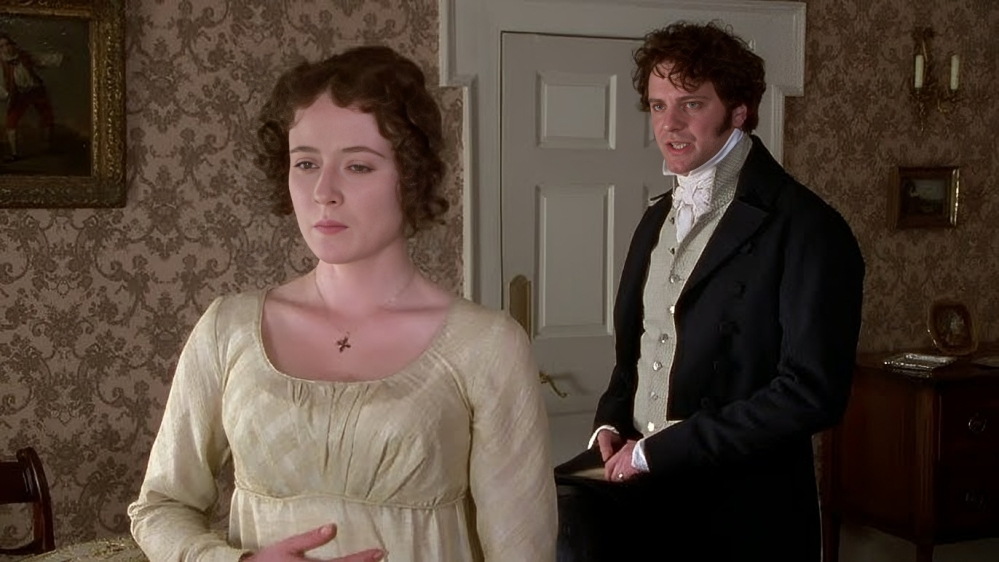
伊丽莎白听后十分愤怒。她认为达西不仅傲慢无礼,而且曾经插手拆散简与宾利,还在威克汉姆的事情上表现不堪。她的回应带着极大的愤慨,直言他是“世界上最后一个我可能会嫁的人”。
MR DARCY (panting): In vain I have struggled. It will not do. My feelings will not be repressed. You must allow me to tell you how ardently [‘ɑːdntli] I admire and love you.
我徒劳地挣扎过,但毫无用处。我的感情无法被压抑。你必须允许我告诉你,我多么热烈地钦佩并爱着你。
倒装感与强调
“In vain I have struggled” 的语序略显古典。现代口语可能说 “I have struggled in vain”。把 “in vain” 放在句首,是为了强调“徒劳”。这是典型的文学修辞——情感被放大。省略与凝练
“It will not do” ——这里的 “do” 并不是字面上的“做”,而是一个古英语里常见的支撑性动词,用来表示“合适 / 有用 / 可行” (be effective / be acceptable / work)。,从语境可知指的是“再压抑下去也无济于事”。这种“留白”常见于19世纪文学,读者需要结合上下文去理解。如果换成今天的人讲话,大概率不会这么“克制”,而会更直接:
“I’ve tried to fight these feelings, but I just can’t anymore.”
(我试过抗拒这种感情,但我再也做不到了。)“I’ve been holding back, but it’s no use—I can’t suppress my feelings any longer.”
(我一直在克制,但没用——我再也压不住自己的感情了。)
MR DARCY: In declaring myself thus, I am fully aware that I will be going expressly against the wishes of my family, my friends, and, I hardly need add, my own better judgment.
在这样表白时,我完全清楚自己是在公然违背家人的意愿、朋友的看法,更不用说违背了我理性的判断。
Expressed:清楚地;明显地;thus:这里是副词,意思是“如此、以这种方式”。(this way…like this…as such)
MR DARCY: The relative situation of our families is such that any alliance between us must be regarded as a highly reprehensible connection. Indeed, as a rational man, I cannot but regard it as such myself, but it cannot be helped.
我们两家在社会地位上的差异,使得我们的结合必然被视为一段极不体面的关系。的确,作为理性的人,我自己也不得不这样认为,但我已无能为力。
Relative:相比较而言的;Alliance [ə’laɪəns]:联姻;结合;Reprehensible [ˌreprɪ’hensəbl]:不道德的;应受谴责与非难的。
MR DARCY: Almost from the earliest moments of our acquaintance, I have come to feel for you a passionate admiration and regard, which, despite all my struggles, has overcome every rational objection, and I beg you, most fervently, to relieve my suffering and consent to be my wife.
几乎从我们初识之时起,我便对你怀有炽烈的敬慕与情感。尽管我一再抗拒,它却最终战胜了所有理性的反对。此刻我迫切地恳请你,解脱我的痛苦,答应成为我的妻子。
Fervently [‘fɜːvəntli]:来自 fervent,拉丁语词根 fervere = “to boil”。 → 带有“炽热、强烈、真诚”的意味;核心含义:来自 ardent,词根 ardere = “to burn”。 → 带有“炽热的、热心的、充满激情”的意味。
ELIZABETH: In such cases as these, I believe the established mode is to express a sense of obligation, but I cannot. [Darcy holds his breath, hands clasped behind his back.]
在这种场合下,我想按照惯例应该表示感激,但我做不到。
Established mode:已经建立起来的模型,当它从人群中流行开来,就会变成一种惯例;Obligation:除了指责任与义务,还可以指回礼与感激。
ELIZABETH: I have never desired your good opinion, and you have certainly bestowed it most unwillingly. I am sorry to cause pain to anyone, but it was most unconsciously done, and I hope will be of short duration. [Darcy looks upset and walks over to the mirror. He turns back to face her.]
我从未渴望过你的好感,而你显然也是极不情愿地给了我这份好感。很抱歉伤害任何人,但这完全不是有意为之,而且我希望这痛苦能很快过去。
Bestow [bɪ’stəʊ]:给予、赋予;Unconsciously [ʌn’kɒnʃəsli]:无意识地;不知不觉地 (反义词:Intentaionally)
MR DARCY: And this is all the reply I am to expect? I might wonder why, with so little effort at civility, I am rejected.
所以,这就是我唯一能得到的答复?我不禁要问,为什么你以如此欠缺礼貌的方式来拒绝我?
Civility [sə’vɪləti]:礼貌;谦恭
ELIZABETH: And I might wonder why, with so evident a desire to offend and insult me, you chose to tell me that you like me against your will, against your reason, and even against your character. ——>> Was this not some excuse for incivility, if I was uncivil? [Elizabeth shakes her head.]
那我也要问了,既然你如此明显地带着冒犯与侮辱,竟然告诉我你喜欢我是违背你的意愿、理性,甚至性格的。——>> 那么,如果我表现得无礼,难道这不是理由吗?
ELIZABETH: I have every reason in the world to think ill of you. Do you think any consideration would tempt me to accept the man who’s been the means of ruining the happiness of a most beloved sister? ——>> Can you deny that you have done it?
我有充分的理由看轻你。你以为有什么理由能让我接受一个毁掉我亲爱姐姐幸福的人吗?——>> 你能否认你做过吗?
MR DARCY: I have no wish to deny it. I did everything in my power to separate my friend from your sister, and I rejoice in my success. ——>> Towards him I have been kinder than towards myself.
我并不打算否认。我竭尽全力将我的朋友与你姐姐分开,并且我为成功而高兴。——>> 相比之下,我待他比待自己更仁慈。
Rejoice in sth:to take great joy, delight, or pride in something. (为对某事感到非常高兴、欣喜或自豪。 近义词:Revel in)
ELIZABETH: But it is not merely that on which my dislike of you is founded. Long before it had taken place my dislike of you was decided when I heard Mr Wickham’s story of your dealings with him. ——>> How can you defend yourself on that subject?
但我的厌恶并不止于此。早在那件事发生之前,我便因听到韦翰先生关于你对待他的说法而决定厌恶你。——>> 在这件事上,你又如何为自己辩护?
从Elizabeth的这段陈述,表面是似乎流露出的尽是对Darcy的不屑和果断的回绝,其实对其做事的动机然而怀有强烈的,甚至是“打破沙锅问到底”的探索欲。我发现女性一个非常奇怪的表征:当她对你有兴趣的时候,她有问不完的问题和分享不完的感受,而当她对你失去爱意的时候,多说一个字都觉得是在浪费。
MR DARCY: And you take an eager interest in that gentleman’s concerns! [Darcy walks to the opposite corner.]
你竟然如此热切地关心那位先生的遭遇!
ELIZABETH: Who that knows what his misfortunes have been could help feeling an interest in him? [Darcy turns around and paces back to the mirror.]
任何知道他遭遇不幸的人,怎能不对他感到同情?
MR DARCY: His misfortunes. Yes, his misfortunes have been great indeed!
他的不幸。是的,他的确遭遇了巨大的不幸!
ELIZABETH: And of your infliction. You have reduced him to his present state of poverty, and yet you can treat his misfortunes with contempt and ridicule.
而这一切不幸,正是你造成的。你让他沦为如今的贫困,却还能够轻蔑和嘲讽他的处境。
[Darcy tilts his head, his mouth open disbelievingly.]
MR DARCY: And this is your opinion of me? [Darcy turns to her.]
这就是你对我的看法吗?
MR DARCY: My faults by this calculation are heavy indeed. [Darcy picks up his hat from the tiny table and walks toward the door. He stops to speak.]
照你这么算,我的过错的确重大。
MR DARCY: But perhaps these offences might have been overlooked had not your pride been hurt by the honest confession of the scruples which had long prevented my forming any serious design on you. Had I concealed my struggles and flattered you. But disguise of every sort is my abhorrence. Nor am I ashamed of the feelings I related. They were natural and just. Did you expect me to rejoice in the inferiority of your connections? [Elizabeth stands up and faces her back to him.]
若不是你因我坦率承认(抑制我对你动了真心的各种顾虑)而让你的自尊心受到了伤害,若我掩饰了挣扎,转而去奉承你,或许这些过失本可以被忽略,但一切伪装都是我所厌恶的。我也不为我所表达的感情感到羞耻,那是真挚而正当的。难道你指望我为你卑微的家世而欣喜?
Scruples [‘skruːpl]:顾忌;顾虑;Abhorrence [əb’hɒrəns] :可憎恶的人或事;Relate [rɪ’leɪt]:叙述、讲述 、表达;
MR DARCY: To congratulate myself on the hope of relations whose condition in life is so decidedly(明确地、毫无疑问地)below my own? [Elizabeth turns back to face him.]
要我为能攀附那些生活境遇远远低于我的亲戚而感到庆幸?
ELIZABETH: You’re mistaken, Mr Darcy. The mode of your declaration merely spared me any concern I might have felt in refusing you, had you behaved in a more gentlemanlike manner. ——You could not have made me the offer of your hand in any possible way that would have tempted me to accept it. From the very beginning, your manners impressed me with fullest belief of your arrogance, your conceit, and your selfish disdain for the feelings of others. I had not known you a month before I felt you were the last man in the world whom I could ever marry.
你错了,达西先生。你求婚的方式反倒让我在拒绝时没有丝毫负担,若你当时表现得更像绅士,也许我还会犹豫。可你无论以何种方式向我求婚,都不可能让我心动,更不可能让我接受。从一开始,你的举止就让我深信你是一个傲慢、自负、冷漠无情的人。我认识你还不到一个月,就已确信你是这世上最后一个我会嫁的人。
MR DARCY: You have said quite enough, Madam. I perfectly comprehend your feelings. And now have only to be ashamed of what my own have been. Please forgive me for having taken up your time and accept my best wishes for your health and happiness.
夫人,你已经说得够多了。我完全明白你的感受,而我现在只需为自己的感情感到羞愧。请原谅我占用了你的时间,并接受我对你健康与幸福的良好祝愿。
[Darcy bows and leaves without looking back. Elizabeth sighs and lowers her head.]
此处内容需要权限查看
奥斯汀的天才之处在于,她让达西的告白,在表达”热烈的爱”的同时,听起来却令人难以忍受地傲慢。他不是从爱意开始,而是先坦白自己内心的挣扎,将他的爱框定为一种非自愿的判断失误——”违背我自己的理智”。他细致地列举了伊丽莎白家庭”应受谴责”的社会低微,并自认为诚实地提出这些反对意见是一种美德。在他心中,他为了她而克服这些理性的障碍,是对她最高的赞美。然而,在伊丽莎白和读者看来,他是在侮辱她以及她所珍视的一切。这在他意图传达的信息和实际接收到的含义之间造成了强烈的冲突。
伊丽莎白的拒绝同样精彩。她拒绝遵循”既定模式”去表达一种感激之情,坚持了自己在道德和智力上的独立。她的反击不仅仅是出于受伤的自尊;更是对他品格的有力控诉,指出他破坏了姐姐简的幸福以及他对威克姆先生的不公对待。奥斯汀利用这场冲突揭示了真相:达西的傲慢和伊丽莎白的偏见都蒙蔽了他们的双眼。达西看不到她同等的价值,而伊丽莎白则因轻信了威克姆的诽谤而看不到他的真实本性。
奥斯汀最终想要传达的内涵是,真正的婚姻不能建立在社会算计或是一种忽略品格缺陷的激情之上。它必须建立在相互尊重、自我认知和道德正直的基础上。这次痛苦而坦诚的冲突对两个人物的成长都是必要的。达西必须被羞辱,才能学会超越他的社会地位看人;伊丽莎白的偏见必须受到挑战,才能做出更公正的判断。这次失败的求婚是一个熔炉,锻造了他们未来建立真正结合的可能性。
Jane Austen’s construction of Darcy’s disastrous proposal scene in Pride and Prejudice is a masterclass in dramatic irony and character revelation. The dialogue is not merely a plot device but the very engine that drives the novel’s central themes.
Austen’s genius lies in making Darcy’s declaration, while professing “ardent love,” sound insufferably condescending. He begins not with affection, but with a confession of his own internal struggle, framing his love as an involuntary lapse in judgment—”against my own better judgment.” He meticulously catalogues the “reprehensible” social inferiority of Elizabeth’s family, believing his honesty about these objections is a virtue. In his mind, he is paying her the highest compliment by overcoming these rational obstacles for her sake. However, to Elizabeth and the reader, he is insulting her and everything she holds dear. This creates a powerful collision between his intended message and its received meaning.
Elizabeth’s rejection is equally brilliant. She refuses the “established mode” of polite feminine gratitude, asserting her moral and intellectual independence. Her counter-attack is not just about wounded pride; it is a pointed indictment of his character, citing his role in “ruining the happiness” of her sister Jane and his unjust treatment of Mr. Wickham. Austen uses this confrontation to expose the truth: Darcy’s pride and Elizabeth’s prejudice have blinded them both. He is blind to her equal worth, and she is blind to his true nature, having accepted Wickham’s slanderous account without question.
The ultimate内涵 (connotation) Austen conveys is that true marriage cannot be built on social calculation or even on a passion that ignores character flaws. It must be founded on mutual respect, self-awareness, and moral integrity. This painful, honest clash is necessary for both characters’ growth. Darcy must be humbled to see beyond his social status, and Elizabeth must have her prejudices challenged to judge more fairly. The proposal’s failure is the crucible that forges their possibility for a later, truer union.
Mr. Darcy’s failure to see Elizabeth’s “equal value” is the very essence of his pride. It manifests not as a denial of her personal charm, but as a fundamental inability to equate her social standing with her intrinsic worth as a human being.
-
The Confusion of Social Rank with Personal Merit: In Darcy’s worldview, which was shaped by his immense wealth and high social rank, a person’s value was inherently tied to their family connections, wealth, and social prestige. When he lists the “reprehensible” nature of her family’s situation, he genuinely believes he is stating objective facts that diminish her eligibility. He sees her family’s “inferiority” as a stain on her personal value, something he must magnanimously “overlook” due to his passion. He does not yet understand that Elizabeth’s value—her intelligence, integrity, wit, and moral courage—exists independently of and even in spite of her family’s behavior.
-
The Proposal as a “Favor” Rather than an “Honor”: The structure of his proposal reveals his mindset. He begins by emphasizing his internal struggle and the sacrifices he is making (“against the wishes of my family… my own better judgment”). This frames the proposal not as a mutual honor, but as a concession he is making from a position of superiority. He expects gratitude for loving her despite her circumstances, rather than humility in seeking a partnership with an equal. He assumes that the offer of his name and fortune is so overwhelmingly advantageous that any sensible woman would accept it, failing to see that Elizabeth values her own self-respect and personal happiness far more.
-
Disregard for Her Agency and Judgment: Darcy is shocked by Elizabeth’s rejection not only because it wounds his pride, but because it contradicts his entire worldview. A woman of her “lowly” station dares to refuse a man of his stature? This shock reveals that he did not truly see her as an autonomous moral agent whose judgment of his character could be valid. He saw himself as the evaluator and her as the object being evaluated. Her fierce defense of Jane and Wickham challenges this power dynamic, forcing him to see that he is also being judged by her standards—standards he initially dismisses as irrelevant.
In summary, Darcy’s blindness was to the fact that true worth is moral and intellectual, not social. He valued the trappings of status, while Elizabeth valued the substance of character. His journey throughout the novel is one of learning to separate the two and finally recognizing that Elizabeth Bennet, in character and intellect, is not merely his equal but in many ways his superior.
达西的“看不到伊丽莎白同等的价值”,正是他“傲慢”的实质。这并非指他否认伊丽莎白的个人魅力,而是指他根深蒂固地无法将她“内在的人格价值”与她“外在的社会地位”等同起来。
将社会等级与个人价值混为一谈: 在达西由巨大财富和崇高社会地位塑造的世界观里,一个人的价值天生就与他的家族关系、财富和社会声望绑定。当他细数她家庭的“不堪”时,他真心认为他只是在陈述客观事实,而这些事实“降低”了她的婚配价值。他将她家庭的“低微”视为她个人价值上的一个污点,是他因为激情而必须“宽宏大量”去忽略的东西。他当时还不明白,伊丽莎白的价值——她的智慧、正直、机智和道德勇气——是独立存在的,甚至恰恰是超越了她家庭行为的。
将求婚视为“恩赐”而非“荣幸”: 他求婚的措辞结构暴露了他的心态。他开场就强调自己内心的挣扎和他正在做出的牺牲(“违背我家族和……我自己理智的意愿”)。这便将求婚框定成了一种来自优越地位的“让步”,而非一种“相互的荣幸”。他期望伊丽莎白因为他不顾她的处境而爱她对他心怀感激,而不是因为他寻求与一个平等者结合而心怀谦卑。他理所当然地认为,他提供的姓氏和财富具有压倒性的优势,任何有理智的女性都会接受。他没能看到,伊丽莎白珍视自己的自尊和个人幸福,远胜于这些外在之物。
忽视她的自主权和判断力: 达西对伊丽莎白的拒绝感到震惊,不仅是因为这伤了他的自尊,更因为这颠覆了他的整个世界观。一个她这样“低微”出身的女子,竟敢拒绝他这样地位的男人?这种震惊揭示了他并未真正将她视为一个自主的道德主体,一个对于他的品格的有效评判者。他把自己看作是评估者,而她是被评估的对象。伊丽莎白为简和威克姆的激烈辩护挑战了这种权力关系,迫使他认识到,他也正在被她的一套标准所评判——而这套标准,他起初是视为无物而加以蔑视的。
总而言之,达西的盲目在于他不明白一个核心事实:真正的价值是道德和智力上的,而非社会性的。 他看重的是地位的表象,而伊丽莎白看重的是品格的实质。他在小说中的成长历程,正是学习将这两者区分开来,并最终认识到,伊丽莎白·班纳特在品格和智慧上,不仅与他平等,甚至在许多方面是他的优越者。
Austen embedded a timeless challenge in Elizabeth’s arc:
“How little of permanent happiness could belong to a couple who were only brought together because their passions were stronger than their virtue.” ➔ True virtue lies in active discernment [dɪ’sɜːnmənt] (perceptive), not passive rule-following.
简·奥斯汀的道是遵循了老子的“天地不仁,以万物为刍狗;圣人不仁,以百姓为刍狗”。(Tao takes no sides, giving birth to both good and evil; the sage takes no sides, treating everyone in an equal manner.),在当今广泛追求所谓门当户对或资源对待的政要巨贾的信仰中,撕开了一道裂缝,让普罗众生,让信奉“万般皆下品,唯有读书高”的年青人,尤其是捧着这本书,幻想着“山沟里飞出的金凤凰”的女孩子看到了希望的曙光,原来:郭晶晶也是可以“Say no” to 霍启刚的,原来梅根·马克尔(金装律师Richel的 扮演者)是可以Kiss“哈里王子” Goodbye的。[/rihide]