
看美剧金装律师学商务英语:师徒谈判及亮剑

这场紧张的会面发生在一家餐厅,前联邦检察官、现任政治人物卡梅伦·丹尼斯召见了他昔日门生、如今的竞争对手——明星律师哈维·斯佩克特。这次相遇被伪装成一次“巧遇”,但哈维立刻识破了表象,直指卡梅伦刻意安排的做法。场景的核心是一场裹挟着含蓄威胁与不安联盟的高风险谈判。卡梅伦深陷“选举年的胡闹”,他警告哈维,他们过去作为搭档的工作正受到审查,可能玷污他们两人。他诉诸往日情谊,试图将自己定位为教会哈维如何获胜的导师,敦促哈维运用其技巧悄悄了结此事。
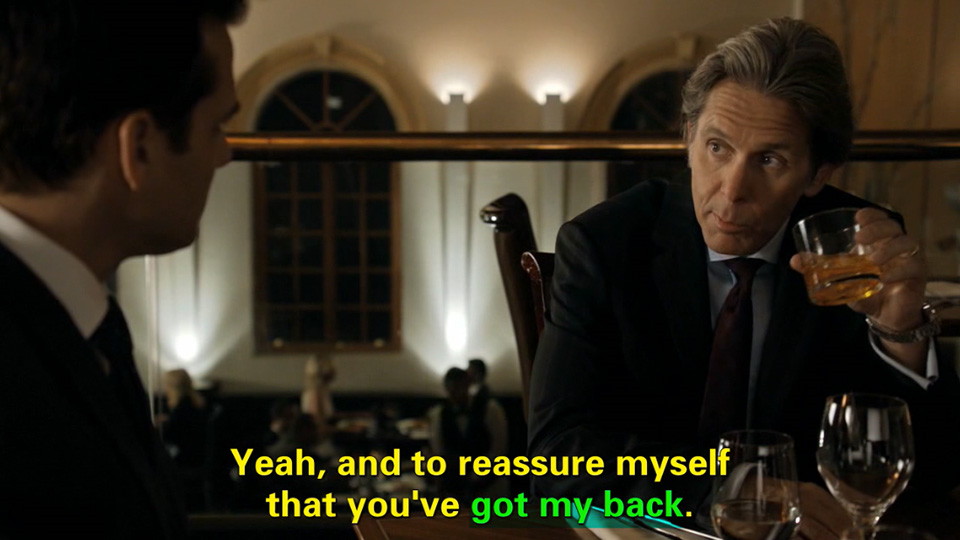
哈维则始终保持防备和怀疑,质疑卡梅伦的动机和手段。随着卡梅伦亮出底线——他承诺支持,但“到了紧要关头”绝不会作伪证——权力动态发生了转变。这场戏充满了潜台词,描绘了两个强悍男人之间脆弱的协议:他们共享充满胜利与道德模糊秘密的过去,彼此都在试图确保对方的忠诚,同时又为潜在的背叛做准备。
Cameron:Hey, Harvey. 嘿,哈维。
——>>Glad you could make it. How are you? 很高兴你能来。你好吗?
Harvey:Tell me about the bullshit run-in that you staged this morning. 跟我说说你今天早上安排 / 策划 的那场狗屎巧遇吧。
——>>How long did you have to wait so that you could pretend to be surprised to see me? 你等了多久,才能装出见到我很惊讶的样子?
Cameron:Ten minutes. 十分钟。
——>>You’re never early, but I didn’t want to cut it too close. 你从不早到,但我不想把时间卡得太紧。
To cut something too close means to do something with too little time, too little margin, or too much risk, leaving almost no room for error. It implies the person nearly failed, missed, or caused a problem because they waited too long or gave too little buffer. (某件事做得太赶、太冒险、时间或余地留得太少,几乎出了差错或差点赶不上。)
Daily Conversation(日常会话)
We got to the airport five minutes before boarding — we really cut it too close.
我们登机前五分钟才到机场——真是把时间压得太紧了。You submitted the assignment one minute before the deadline. You cut it way too close.
你在截止前一分钟才交作业,真的拖得太危险了。Business Context(商务场景)
The team finished the presentation ten minutes before the meeting. They cut it too close.
团队在会议前十分钟才完成简报,他们把时间卡得太死了。If we ship the product today, we’re still cutting it too close for the client’s launch date.
就算我们今天发货,对客户的上线日期来说还是太赶了。
——>>I also just had another little run-in with Alexandra Leeds. 我刚才还跟亚历山德拉·利兹“巧遇”了一下。
Harvey:You really want to drag me into this? 你真想把我拖下水?
Cameron:Calm down, Harvey. I’m not dragging you into anything. 冷静点,哈维。我不是要把你拖进任何事情。
——>>They’re dragging me into this. 是他们把我拖进来的。
——>>It’s election year nonsense, and I wanted to warn you. 这是选举年的胡闹,我想警告你。
Harvey:So you asked me here to warn me? 所以你叫我来这儿是为了警告我?
Cameron:Yeah, and to reassure myself that you’ve got my back. 对,同时也让我自己放心,你会支持我。
Harvey:How bad is it? 情况有多糟?
Cameron:It’s nothing I can’t handle, but I’m glad you’re here. 没什么我应付不了的,但我很高兴你在这儿。
——>>Look, Harvey. Whatever differences we had, we were a good team. 听着,哈维。无论我们过去有什么分歧,我们曾是好搭档。
——>>The truth is that… if anything taints the work that we did, it’ll be bad for both of us. 事实是……如果有什么玷污了我们过去的工作,对我们俩都没好处。
Harvey:Is that a threat? 这是威胁吗?
Cameron:Not at all. It’s just reality. 绝不是。这只是现实。
——>>We put away bad people, Harvey. We fought tough battles, and we won. 我们把坏人送进了监狱,哈维。我们打过硬仗,而且我们赢了。
——>>I taught you how to win. 是我教你怎么赢的。
Harvey:That’s not exactly what you taught me. 你教我的可不完全是这个。
Cameron:I know that you didn’t always approve of the means, but we both know that the end result was always right. 我知道你并不总是赞同手段,但我们都知道最终结果总是正确的。
Harvey:You’re still the best smooth-talker I know. 你仍然是我认识的最能说会道的人。
A smooth talker is someone who speaks in a charming, persuasive, or flattering way, often making promises or compliments that may not be sincere. (说话圆滑、能说会道、擅长用甜言蜜语打动别人的人,有时带有“不太可靠/油嘴滑舌”的含义。)
Daily Conversation(日常)
Be careful—he’s a smooth talker, and he can get people to do whatever he wants.
小心点——他很能说会道,想让别人做什么就能做到。Don’t let that smooth talker convince you to buy something you don’t need.
别让那个油嘴滑舌的人劝你买你根本不需要的东西。Business Context(商务)
The candidate is a smooth talker, but we need to see whether he can actually deliver results.
这个应聘者很会说,但我们得看看他是否真的能拿出成果。He’s a smooth talker in negotiations, but the contract still needs a solid strategy behind it.
他在谈判中很能说会道,不过合同背后仍需要一个扎实的策略。
——>>Use it now. Talk your way out of this. 现在就用上它。靠你的口才摆脱这事。
——>>Settle. 和解吧。
——>>’Cause if this goes to court, there are skeletons to be found. 因为如果这事闹上法庭,会有丑闻被挖出来。
Harvey:They won’t find them. 他们找不到的。
Cameron:You wanna bank on that? 你想指望这个?
To bank on something means to rely on, count on, or confidently expect something to happen. It implies trust, dependence, or expectation — sometimes risky, because the outcome isn’t guaranteed. (依靠、指望、寄希望于某事会发生。语气上带有一定风险,因为结果并非百分百保证。)
Daily Conversation(日常)
Don’t bank on the weather staying sunny; it might rain later.
别指望天气会一直晴朗,待会儿可能会下雨。I’m banking on you to help me move this weekend.
我这周末搬家可就指望你帮忙了。Business Context(商务)
We can’t bank on the client approving the proposal without revisions.
我们不能指望客户在不修改的情况下就批准这个提案。The company is banking on strong holiday sales to hit its quarterly targets.
公司正指望旺季销售来达成本季度目标。
Harvey:I have your back. 我会支持你。
Cameron:I am not volunteering anything. 我不会主动提供任何信息。
——>>But if push comes to shove, I won’t perjure myself. 但如果真到了紧要关头,我不会作伪证。
——>>Not even for you. 即使是为了你也不会。
这一幕展现了哈维·斯佩克特与前导师卡梅隆·丹尼斯之间紧绷却熟悉的重逢。片头以一句对“刻意安排的巧遇”的讽刺开场,但真正的目的很快浮出水面:卡梅隆被卷入选举年的政治风暴,需要哈维的支持。两人的对话在冷幽默、旧日心结与隐含的忠诚之间反复切换。
当卡梅隆暗示过去的“丑闻”(skeletons)可能影响双方声誉时,这也揭开了他们共同的灰色历史——那些曾经赢下的案子、打过的硬仗,以及哈维如今不再完全认同的手段。卡梅隆试图利用怀旧与说服来拉拢哈维,而哈维则保持高度警惕,生怕再次被这位“最能说会道的人”牵着走。
最终,这场戏凸显了两人之间复杂的关系:师徒亦敌亦友,被过去的抉择绑在一起。整段对话像是一场包裹在魅力、愧疚与政治风险中的静默权力角力——典型的《金装律师》式紧张,每一句话都像是警告,也是谈判。
This scene captures a tense yet familiar reunion between Harvey Specter and his former mentor, Cameron Dennis. What begins with a sarcastic jab about a staged “accidental run-in” quickly reveals a deeper agenda: Cameron is caught in political crossfire during an election year, and he needs Harvey’s support. Their conversation shifts between dry humor, old grievances, and unspoken loyalty.
As Cameron hints at potential scandals (“skeletons”) that could damage both of their reputations, the scene exposes the ethically gray history they share—cases they won, battles they fought, and methods Harvey no longer fully endorses. Cameron leans on nostalgia and persuasion, reminding Harvey of their victories, while Harvey keeps his guard up, wary of being manipulated again by a master smooth-talker.
Ultimately, the scene highlights the complex bond between the two: mentor and protégé, allies and critics, tied together by past decisions that could resurface. It’s a quiet power struggle wrapped in charm, guilt, and political danger—classic Suits tension where every line feels like both a warning and a negotiation.