
看美剧《良医》学地道英语口语表达

以下这段对话发生在美剧《良医》第三季第一集,马库斯·安德鲁斯医生职业生涯的一个关键十字路口。在第二季结尾,时任医院主席的安德鲁斯医生做出了一个坚守原则但代价高昂的决定:他开除了新聘请的、声名显赫的外科主任汉医生,以保护一名受到汉医生不公正对待的二年级住院医生克莱尔·布朗。这一充满道德勇气的行为导致了他与医院董事会的冲突,最终致使安德鲁斯医生从主席职位上辞职。
第三季开始时,他已正式离开董事会,正在寻找新工作。莉亚(已从医院董事会联络员转型担任更具战略性的角色,并且正在与肖恩·墨菲医生约会)此时来找他。她准确地指出了他简历上的一个重大污点:他作为主席的任期极短且充满争议。任何潜在的雇主都会质疑他的判断力和稳定性。莉亚的“帮忙”实际上是一个精明的、利己的提议:她需要一位优秀的主治医生来填补他离开后留下的空缺,而他则迫切需要通过证明自己可以重返圣博纳文图尔医院并未断绝后路来修复自己的声誉。这场戏是一场紧张的谈判,莉亚的战略运作与安德鲁斯医生的自尊心以及他对于被操纵的敏锐意识发生了冲突,最终以莉亚的警告结束——她警告他不要让自己的固执(这一曾定义他领导力的特质)成为他今日的弱点。
This dialogue occurs at a critical career crossroads for Dr. Marcus Andrews. At the end of Season 2, Dr. Andrews, then the Hospital President, made a principled but costly decision: he fired the newly hired, high-profile Chief of Surgery, Dr. Han, to protect Dr. Claire Browne, a second-year resident Dr. Han had unfairly targeted. This act of moral courage led to a clash with the hospital board, resulting in Dr. Andrews resigning from his position as President.
Now, at the start of Season 3, he is officially off the board and searching for a new job. Lea, who has transitioned from a hospital board liaison to a more strategic role (and is dating Dr. Shaun Murphy), approaches him. She accurately points out the major red flag on his resume: his extremely short, controversial tenure as President. Any potential employer will question his judgment and stability. Lea’s “favor” is a clever, self-serving offer: she needs a talented attending surgeon to fill the void his departure created, and he desperately needs to rehabilitate his reputation by proving he can return to St. Bonaventure without burning bridges. The scene is a tense negotiation where Lea’s strategic maneuvering clashes with Dr. Andrews’ pride and his sharp awareness of being manipulated, culminating in her warning not to let his stubbornness—the very trait that defined his leadership—become his downfall.

Lea: I don’t think your irons in the fire are very hot. 我认为你手头的机会并不太乐观。
This expression is derived from the older idiom “to have many irons in the fire,” which means to have many opportunities or projects underway. So when someone says:
“Your irons in the fire are not very hot,” it means:👉 The opportunities you currently have are not promising, not ready, or not likely to succeed.
👉 Your prospects look weak or unexciting at the moment.It’s a figurative way of saying:
“Your chances aren’t great.” ; “Your leads aren’t strong.” ; “Nothing you’re working on is heating up.”
In “The Good Doctor” scenario, Lea is warning Dr. Marcus that the interviews he has lined up aren’t strong prospects because he’ll need to explain a difficult part of his résumé.
E.G.1:He’s been sending out resumes for months, but no replies—his irons in the fire are not hot. 他几个月来一直投简历,可一点回音都没有——他手头的机会不容乐观。
E.G.2:I thought joining that club would lead to networking opportunities, but so far, my irons in the fire are not hot. 我本以为加入那个俱乐部会有一些人脉机会,但到目前为止,我获得的人脉十分有限。
E.G.3:His business ventures are not promising; honestly, his irons in the fire are not hot. 他的商业项目前景不乐观,说实话,他手头的机会很渺茫。
E.G.4:She was counting on three big deals this quarter, but with all of them delayed, her irons in the fire are not hot. 她本来指望这个季度能成交三笔大单,但都被拖延了,她手头的机会并不太有利。
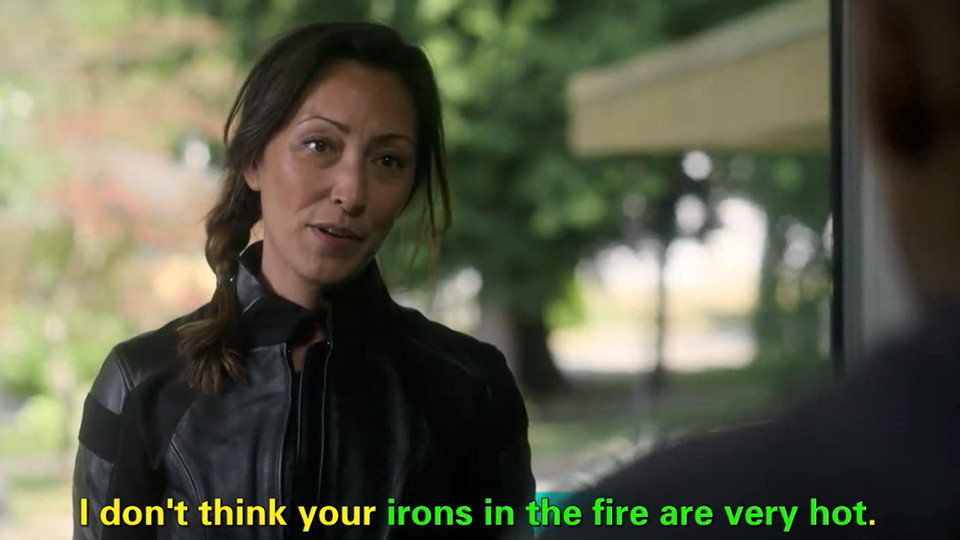
——>> Any job interviews you get, 你得到的任何工作面试,
——>> you’re gonna spend a large chunk of time trying to explain 你都得花大量时间去解释
——>> why you lasted less than a year as President at St. Bonaventure. 为什么你在圣博纳文图尔医院当主席不到一年就离职了。
——>> I mean, how do you put a positive spin on 我的意思是,你要怎么美化
——>> why you spent a fortune on a Chief of Surgery 你为何花大价钱请来一位外科主任
——>> you fired weeks later to protect a second-year resident? 却在几周后为了保护一个二年级住院医生而把他开除了?
Dr. Marcus: You think I made a mistake? 你认为我犯了个错误?
Lea: No, I think you did the right thing. 不,我认为你做得对。
——>> I admire you, which is why I want to do you a favor. 我钦佩你,所以我想帮你个忙。
——>> What you need to do is prove that you haven’t burned any bridges, 你需要做的是证明你没有断掉后路,
——>> which means you have to come back to work at St. Bonaventure. 这意味着你必须回圣博纳文图尔医院工作。
Dr. Marcus: As what? As a surgeon working for you? 以什么身份?作为为你工作的外科医生?
——>> And the fact that you’re undoubtedly in need 而事实上你无疑正需要
——>> of a surgical attending to replace yourself 一位外科主治医生来接替你自己
A surgical attending is a fully qualified and licensed surgeon who has completed residency training and is in charge of a patient’s surgical care. They are the final decision-maker for the patient’s treatment and have legal and professional responsibility for the entire surgical team, which includes residents, fellows, and medical students.(外科主治医师 是指已经完成所有住院医师培训和专科进修(fellowship)的合格外科医生,负责指导外科住院医生、亲自进行手术,并管理医院或诊所中的病人治疗。主治外科医生对手术团队和病人的治疗结果承担最终责任。)
——>> is just a coincidence? 这难道只是巧合?
Lea: It’s what you need. 这是你所需要的。
Dr. Marcus: I admire the effort. 我欣赏你的努力。
——>> But don’t con a con man. 但别在关公面前耍大刀。
To “con a con man” means to trick, deceive, or scam a person who themselves is a con artist. It carries a sly, slightly smug tone, because it’s about beating someone at their own game. The phrase often hints at turning the tables on a professional manipulator. (骗一个骗子,也就是用计谋反过来欺骗那些本身就靠欺骗为生的人。 语气通常带点反转意味,好像是在对方擅长的领域里打败了对方。)
Daily Conversation
He thinks he’s clever, but she basically conned a con man when she sold him that fake collectible. (他以为自己很聪明,其实她卖给他那件假藏品时就是在自作聪明)。
You managed to con a con man? That’s like stealing a magician’s rabbit. (你居然能骗过骗子?这就像从魔术师手里偷走兔子一样。)
Business Context
The auditors uncovered the scheme and essentially conned the con man by making him reveal his own forged records. (审计人员揭露了那套操作,等于是通过让嫌疑人自己露馅来以其人之道还治其人之身。)
Our legal team warned that trying to con a con man in negotiations could backfire if he spots the tactic. (我们的法务团队警告,在谈判中试图班门弄斧,如果被看穿,后果可能适得其反。)
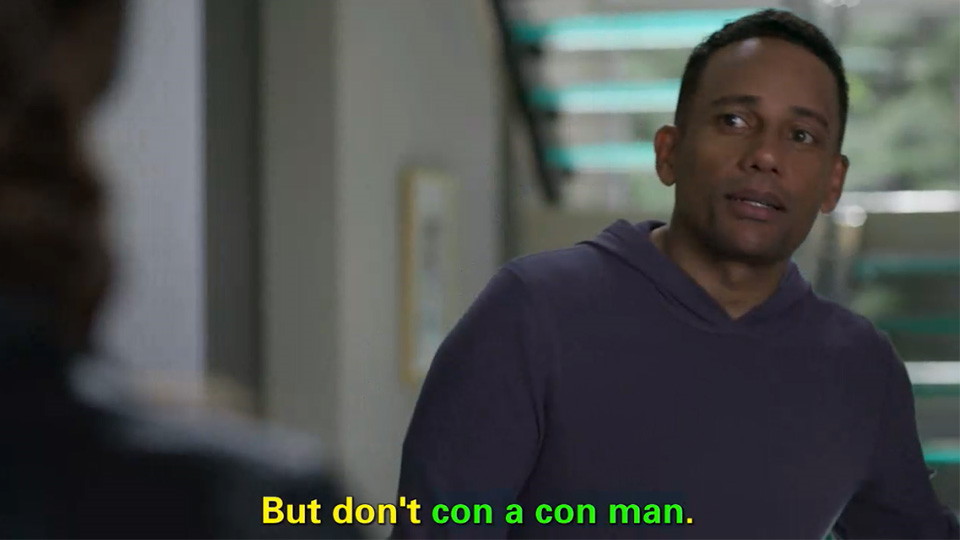
Lea: Your greatest strength and your greatest weakness 你作为领导者最大的优点和最大的缺点
——>> as a leader was your stubbornness. 就是你的固执。
——>> Don’t let it be a weakness today. 今天别让它成为你的弱点。